Food Standards Agency - Alerts Analysis - Contamination Type : Foreign Material
Jump to section
Food Standards Agency - Alerts Analysis
Last Updated: Sunday, February 08, 2026 09:24 AM - Data up to Saturday, 07 February, 2026
Foreign Material Category Contamination Analysis for Food Safety Alerts from
food.gov.uk
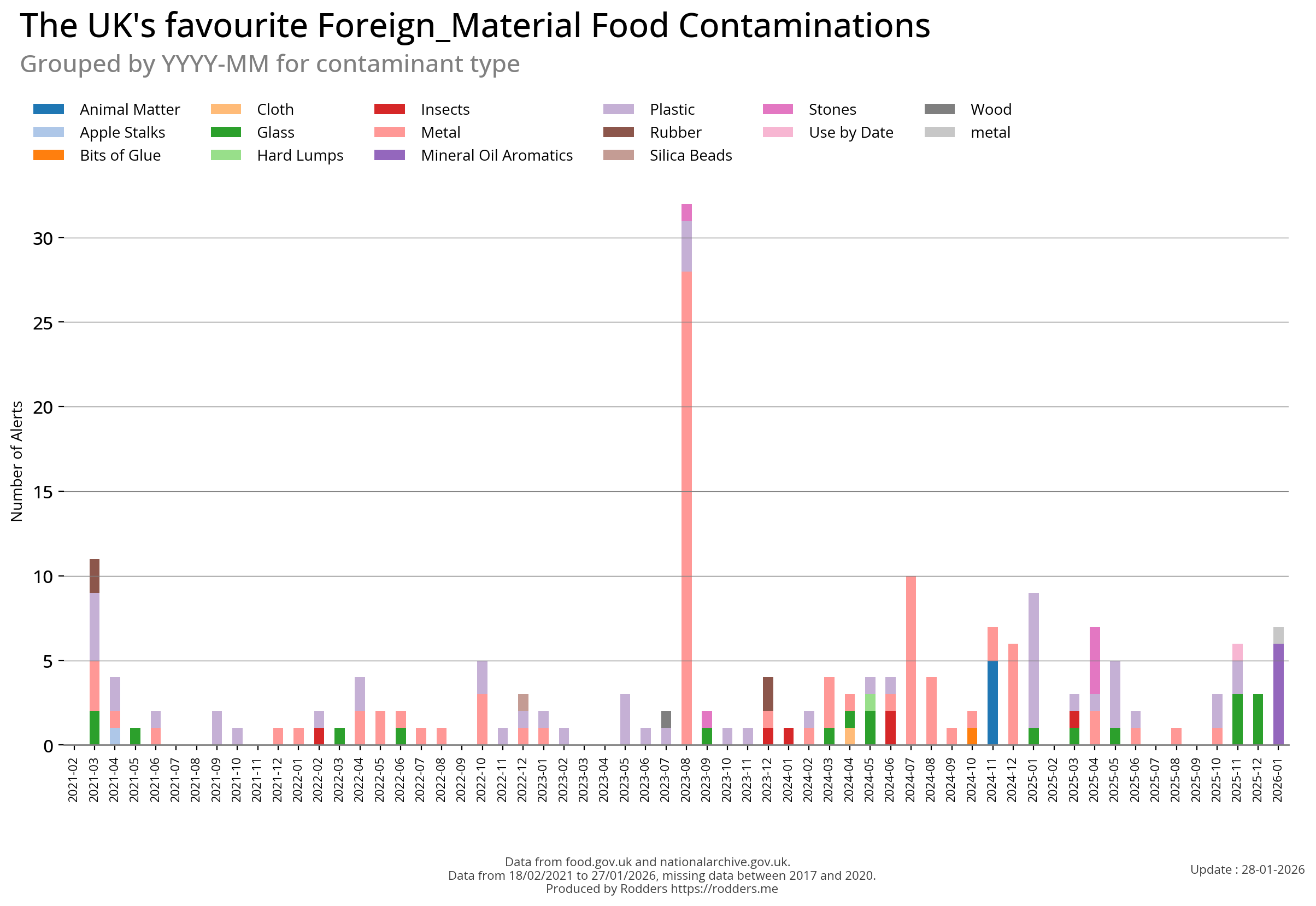
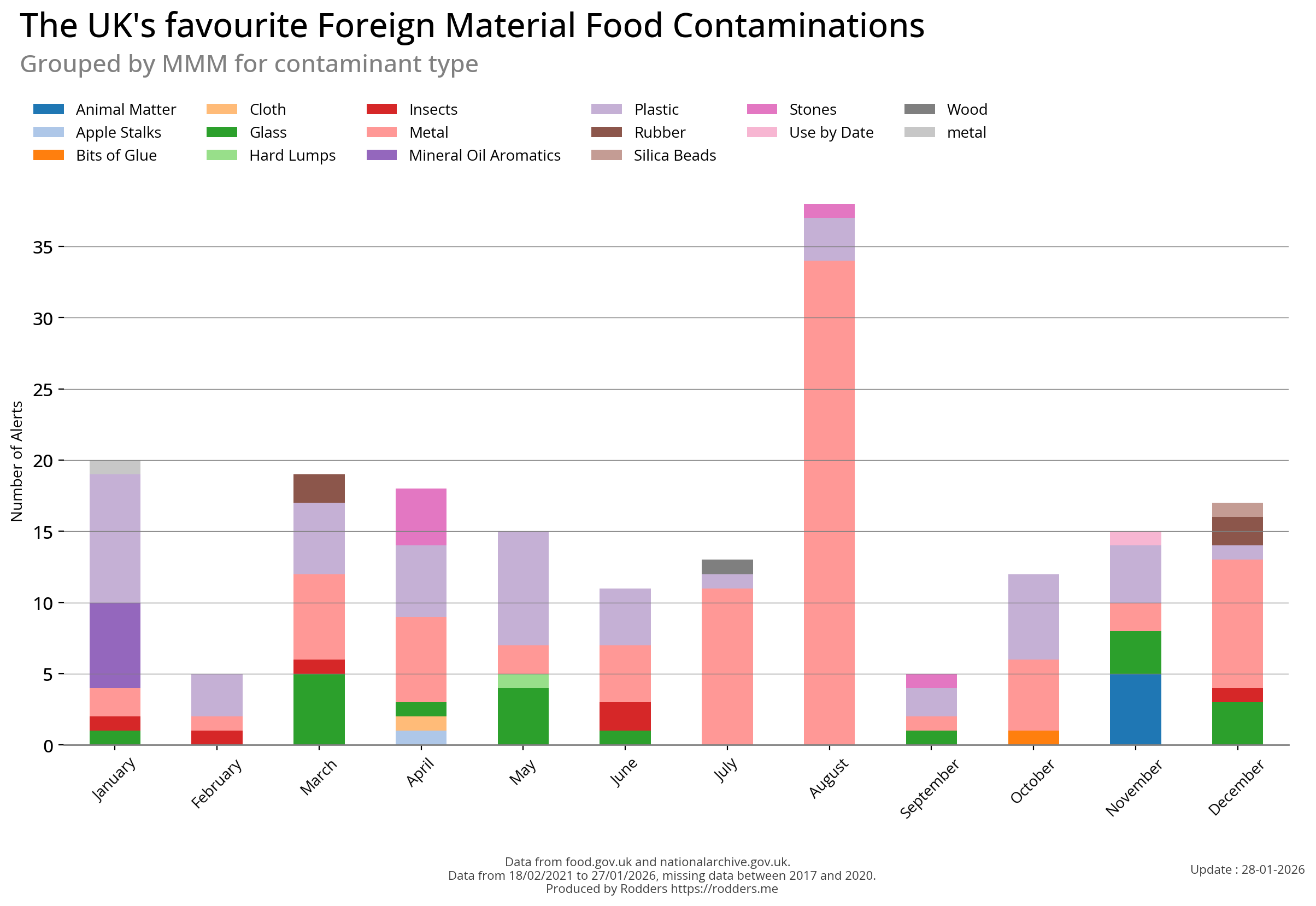
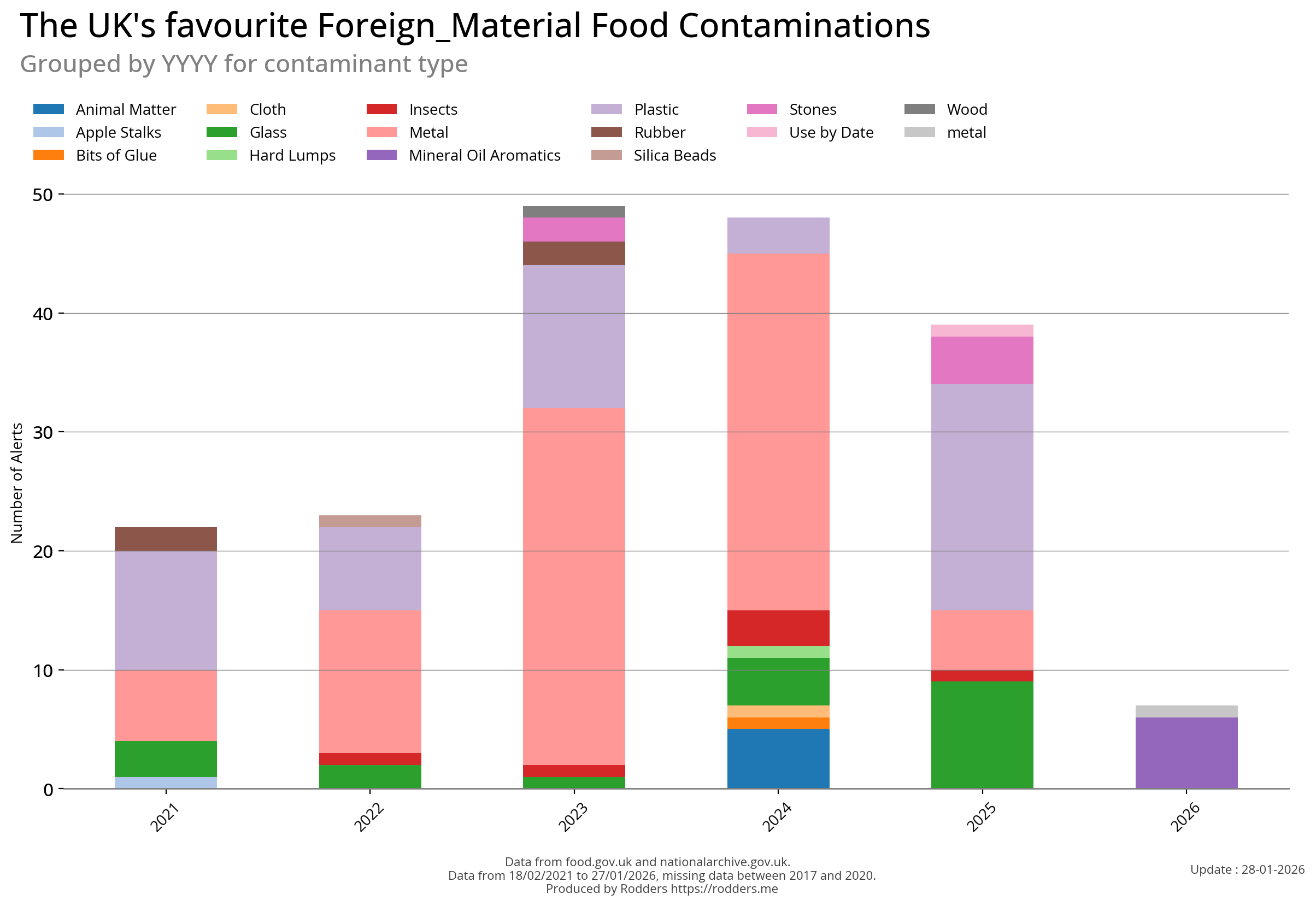
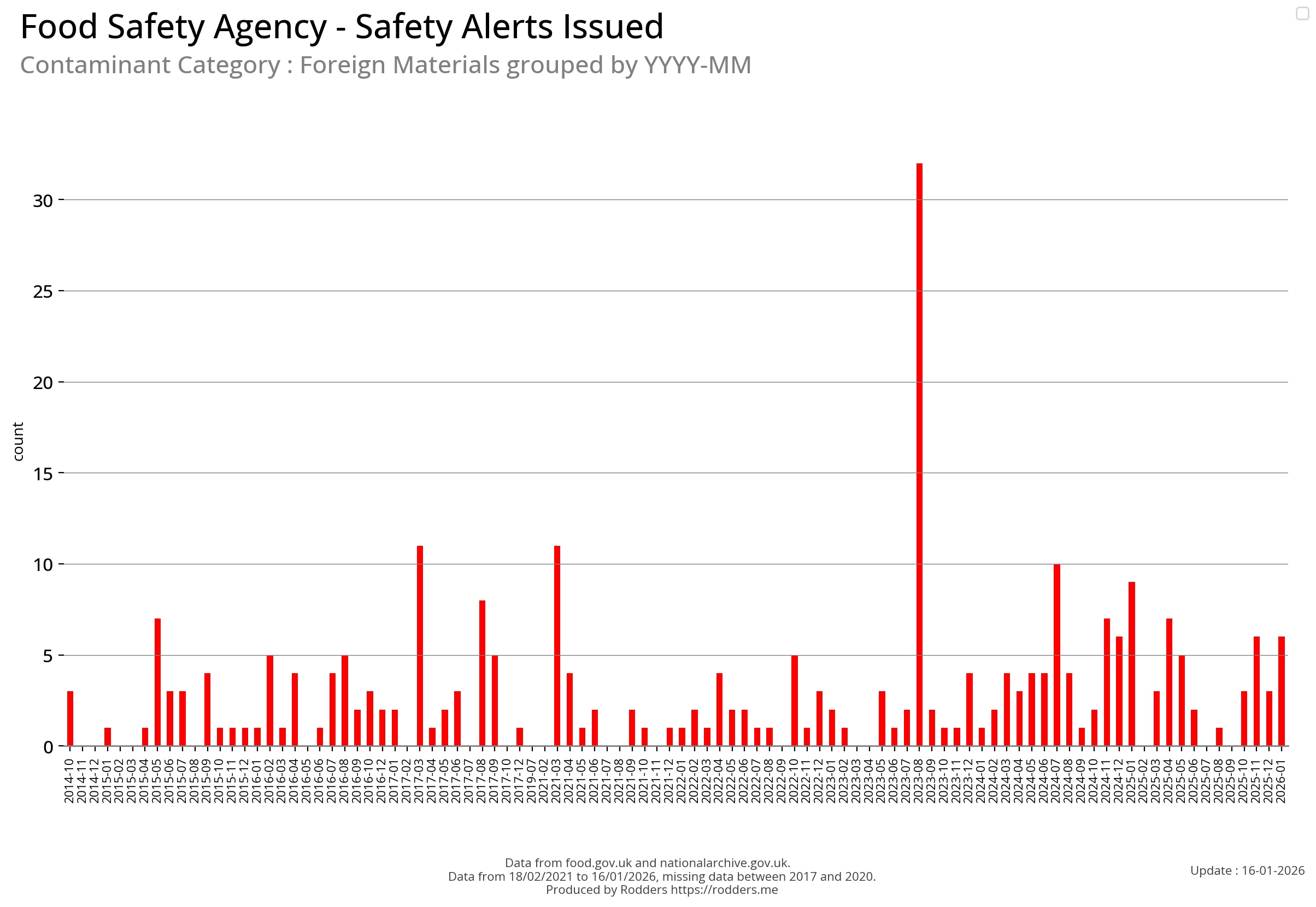
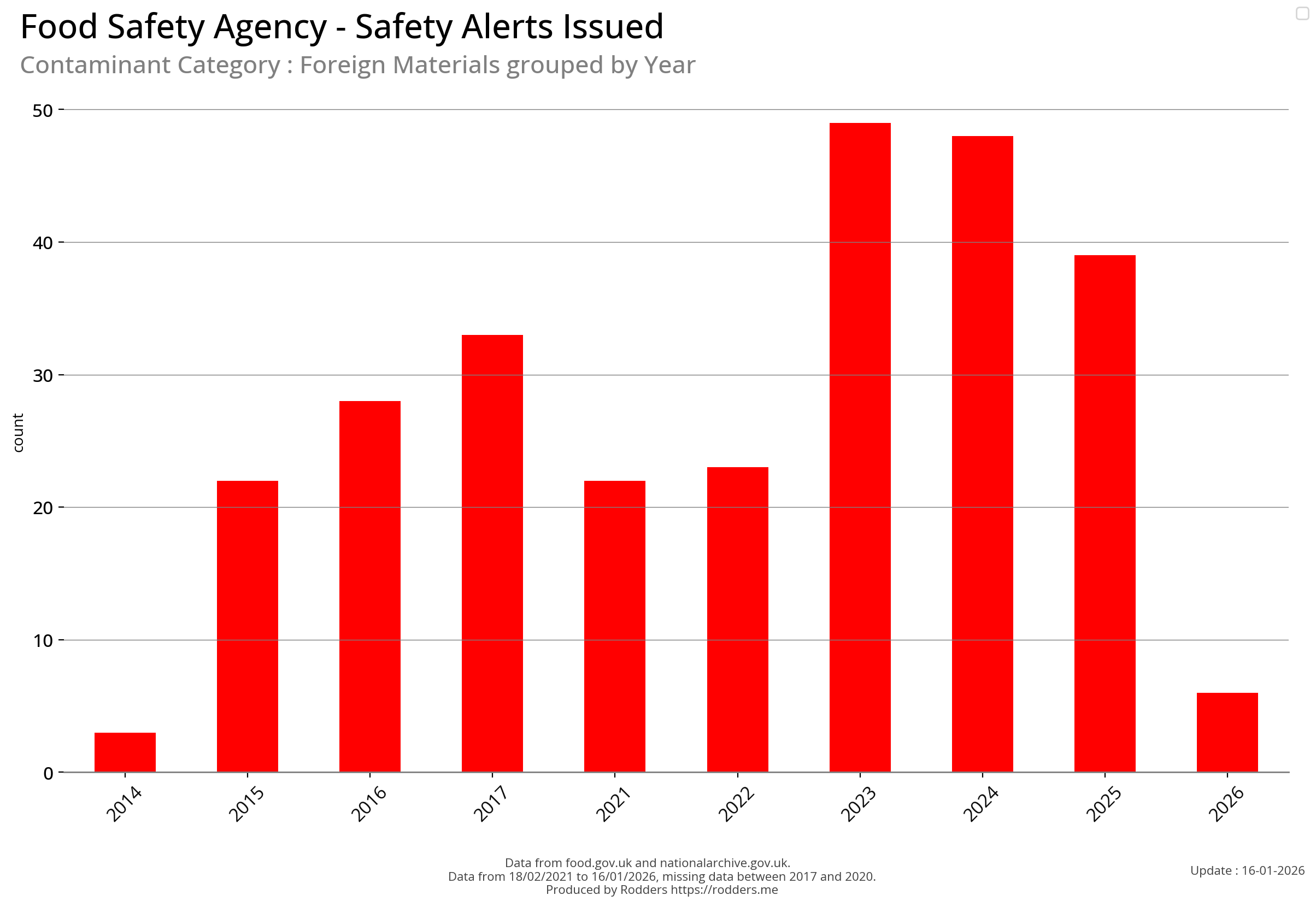
Safety Alerts issued for Foreign Material contamination account for nearly a quarter of all alerts issued (
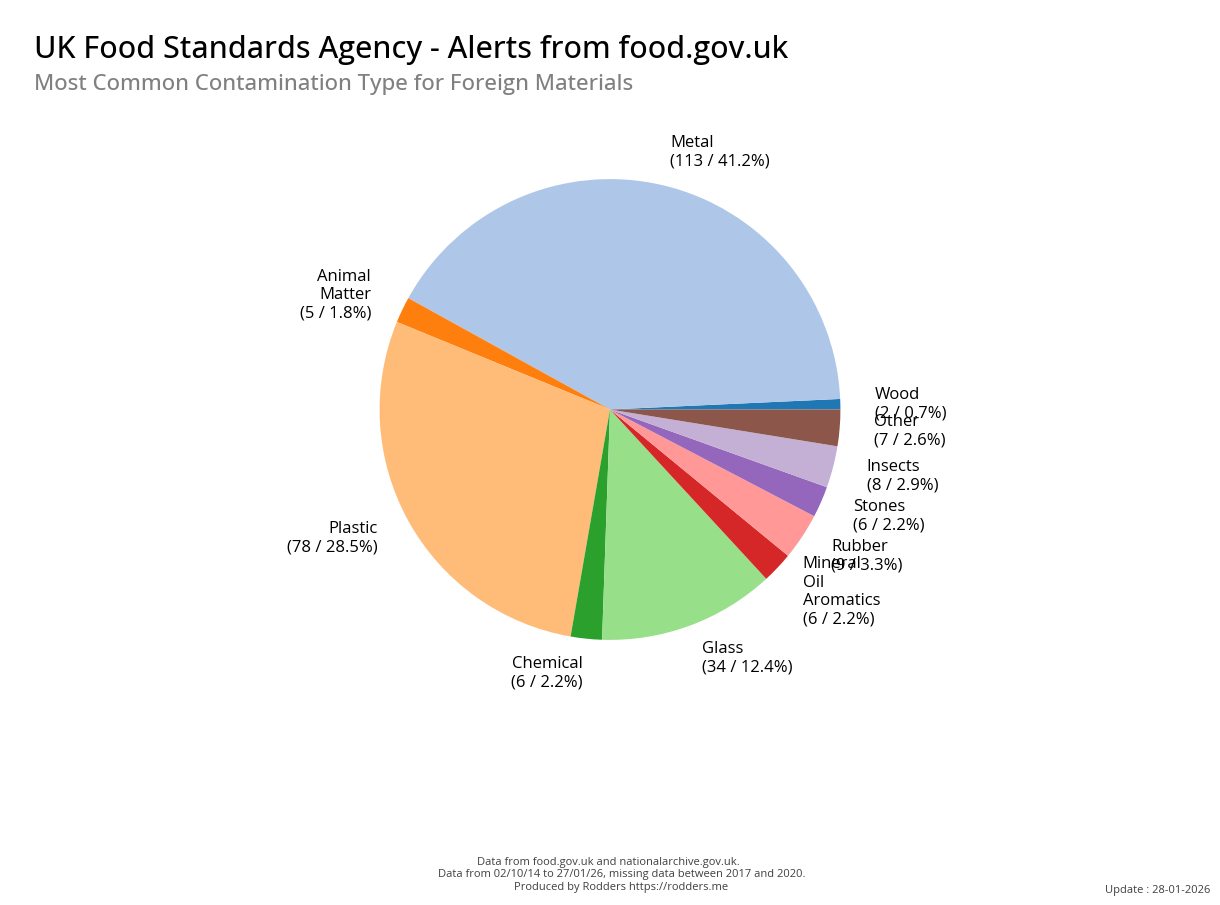
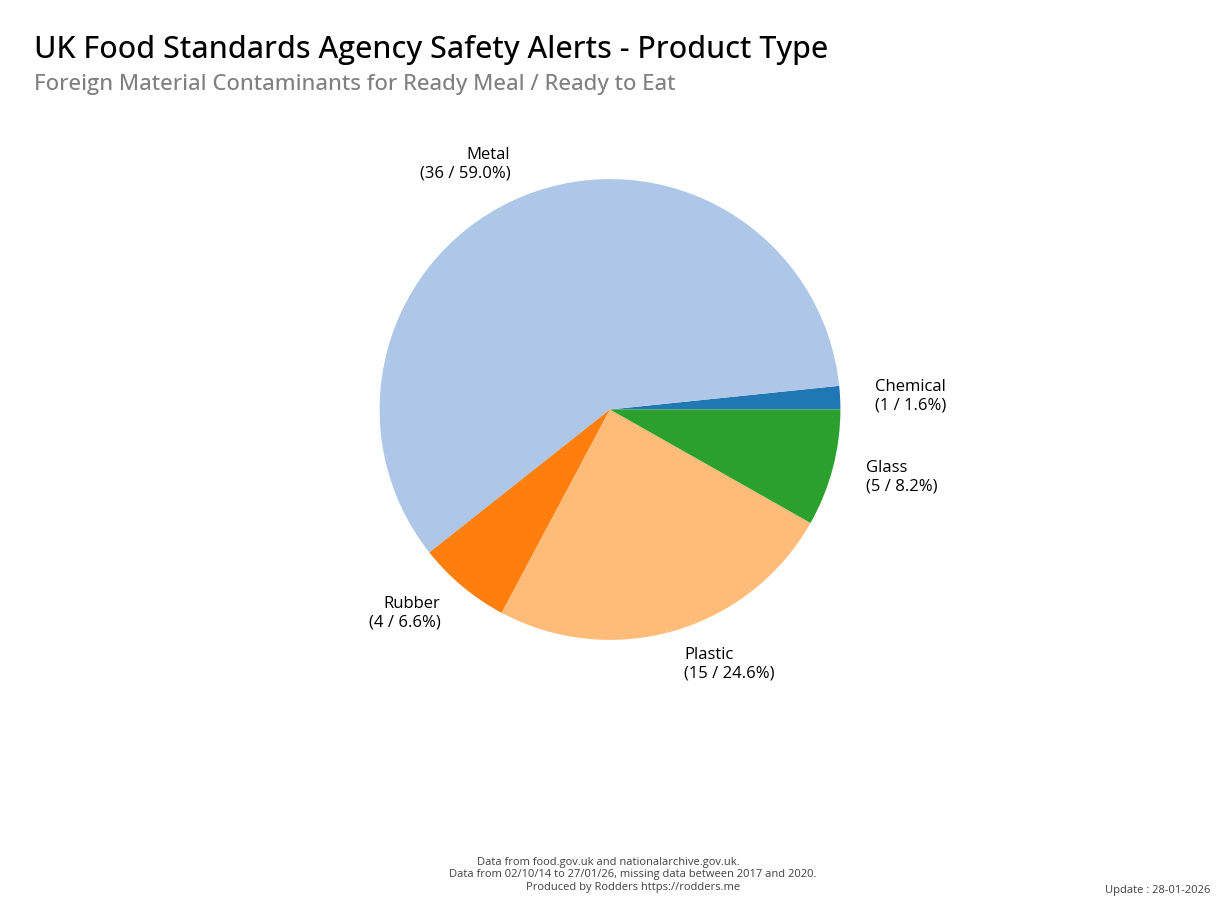
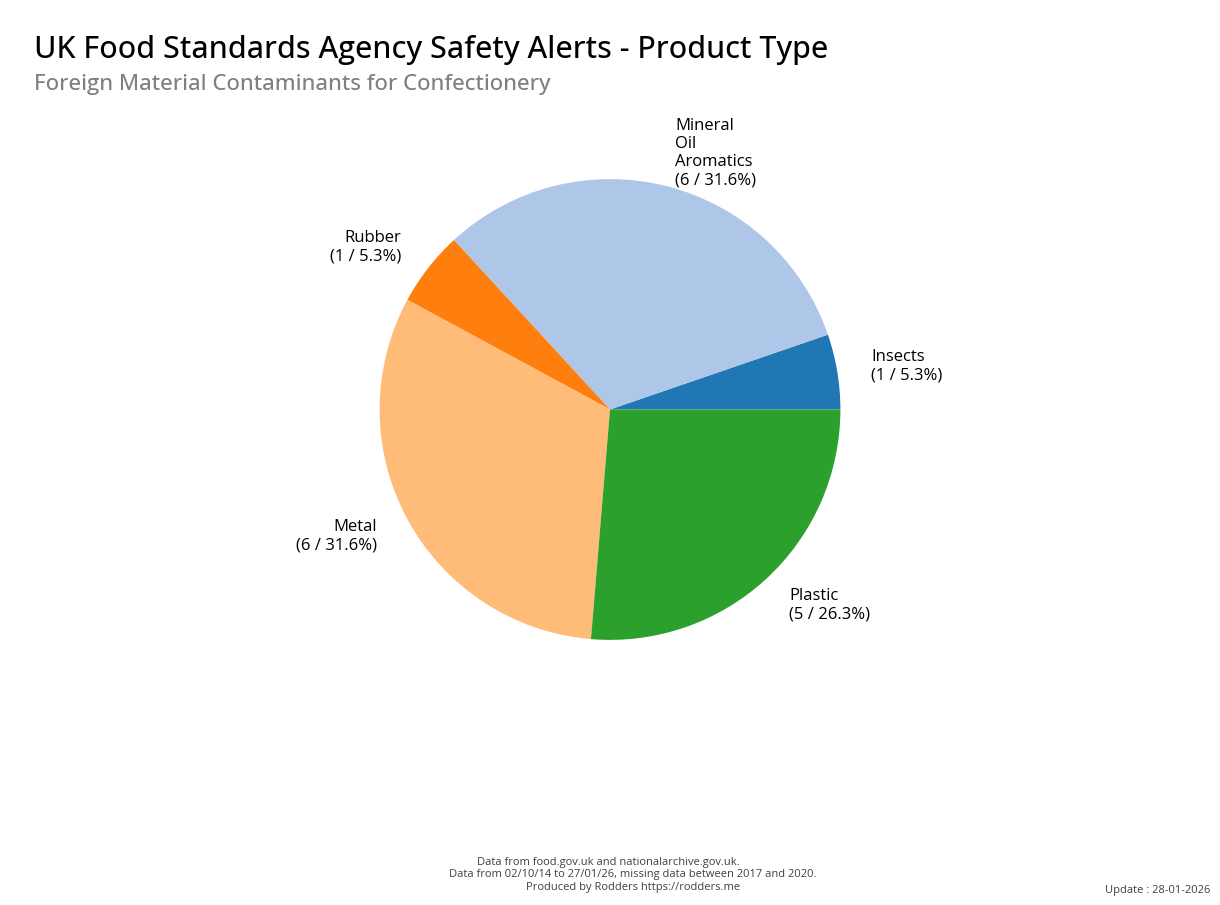
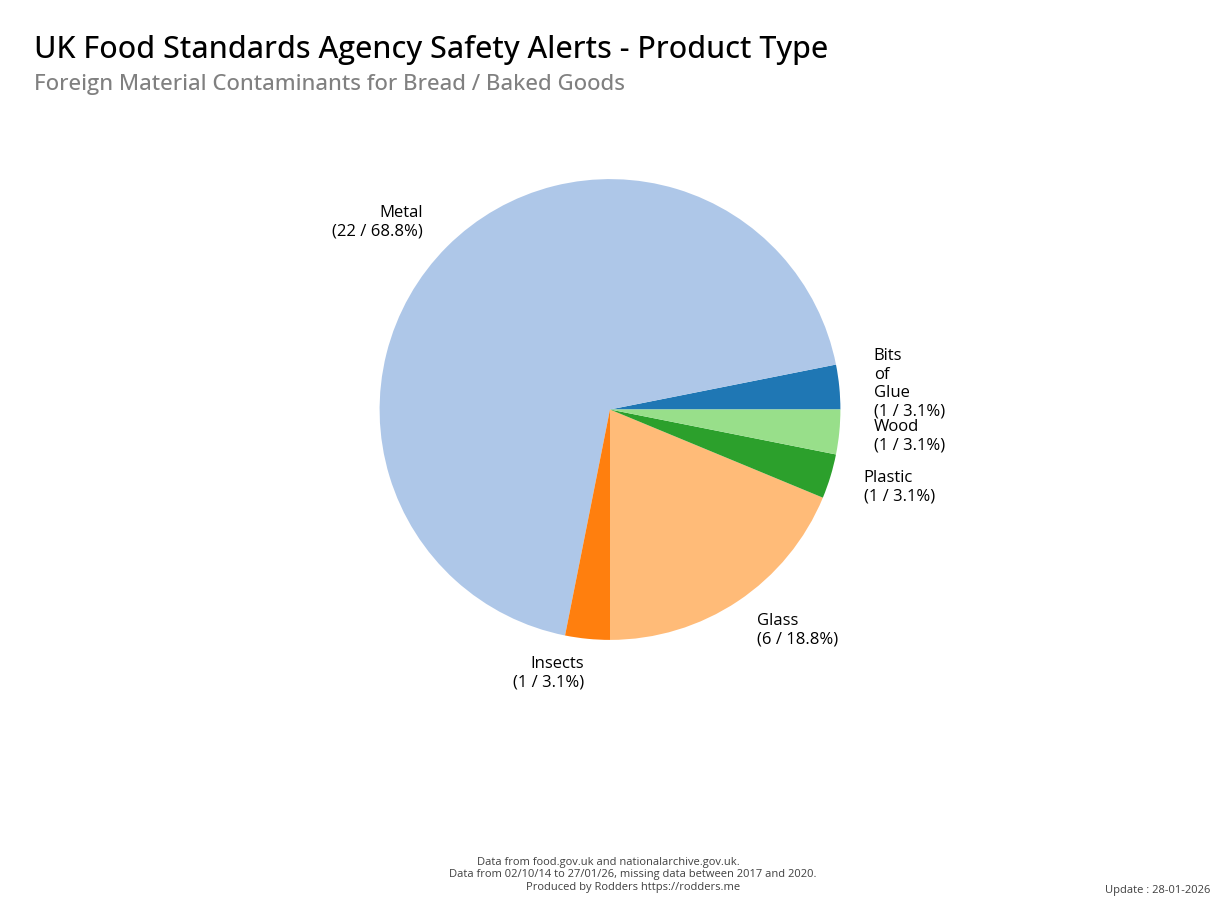
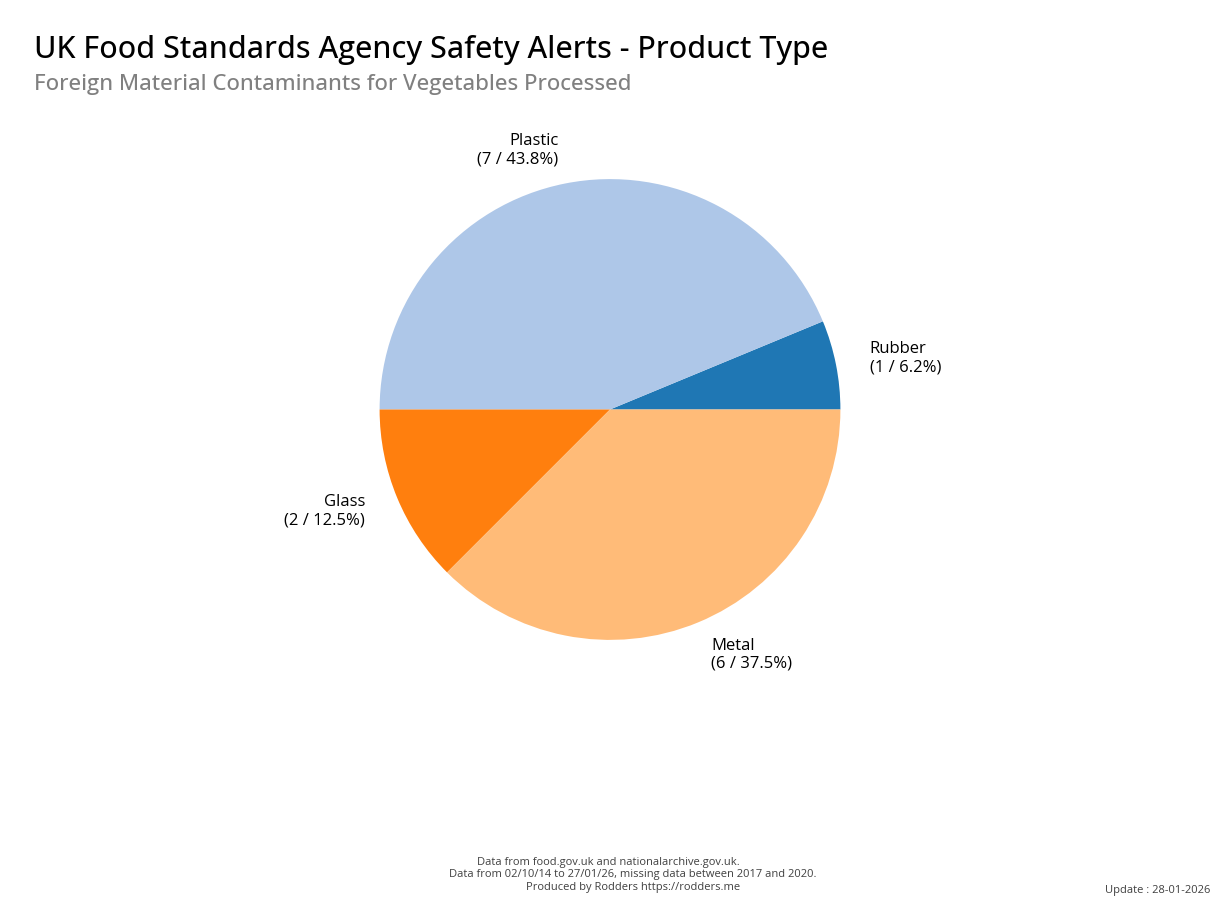
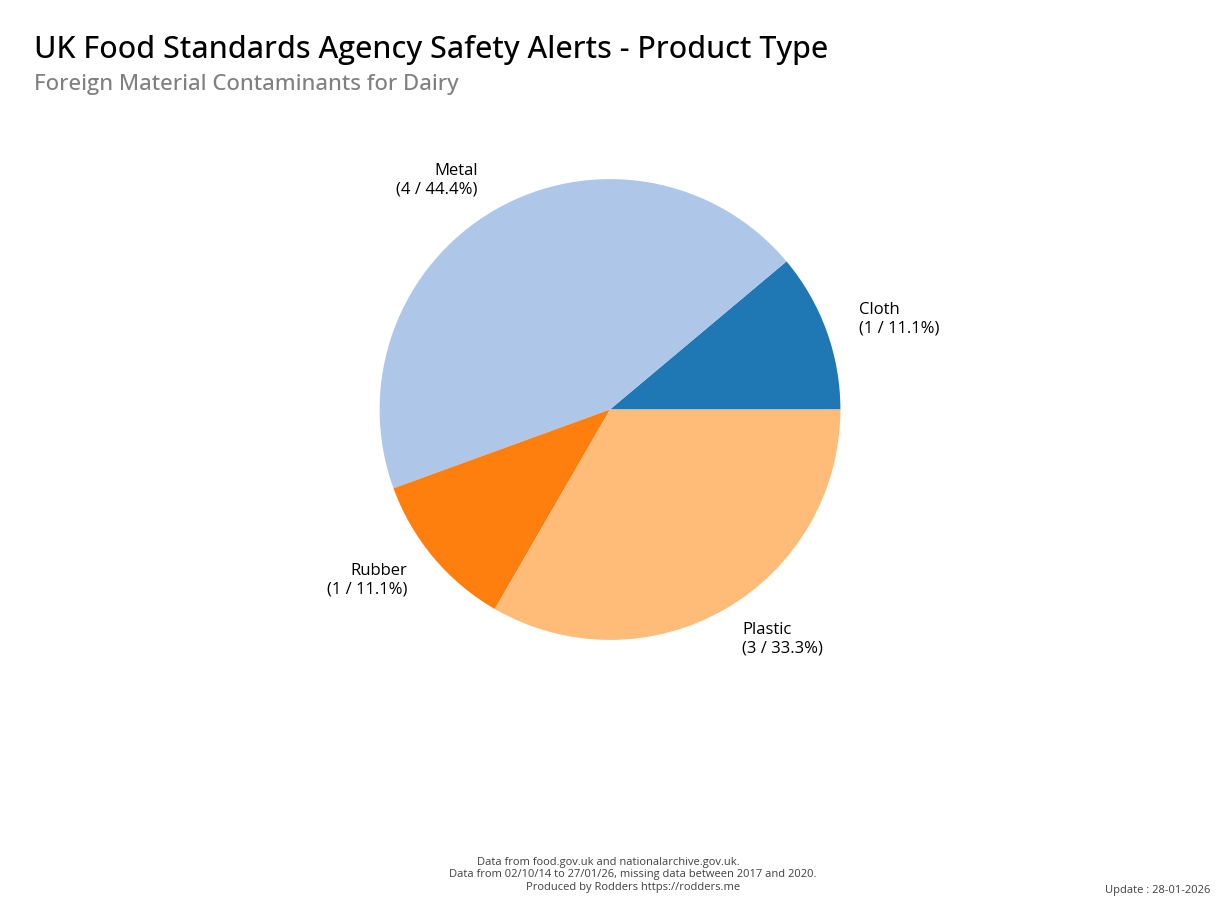
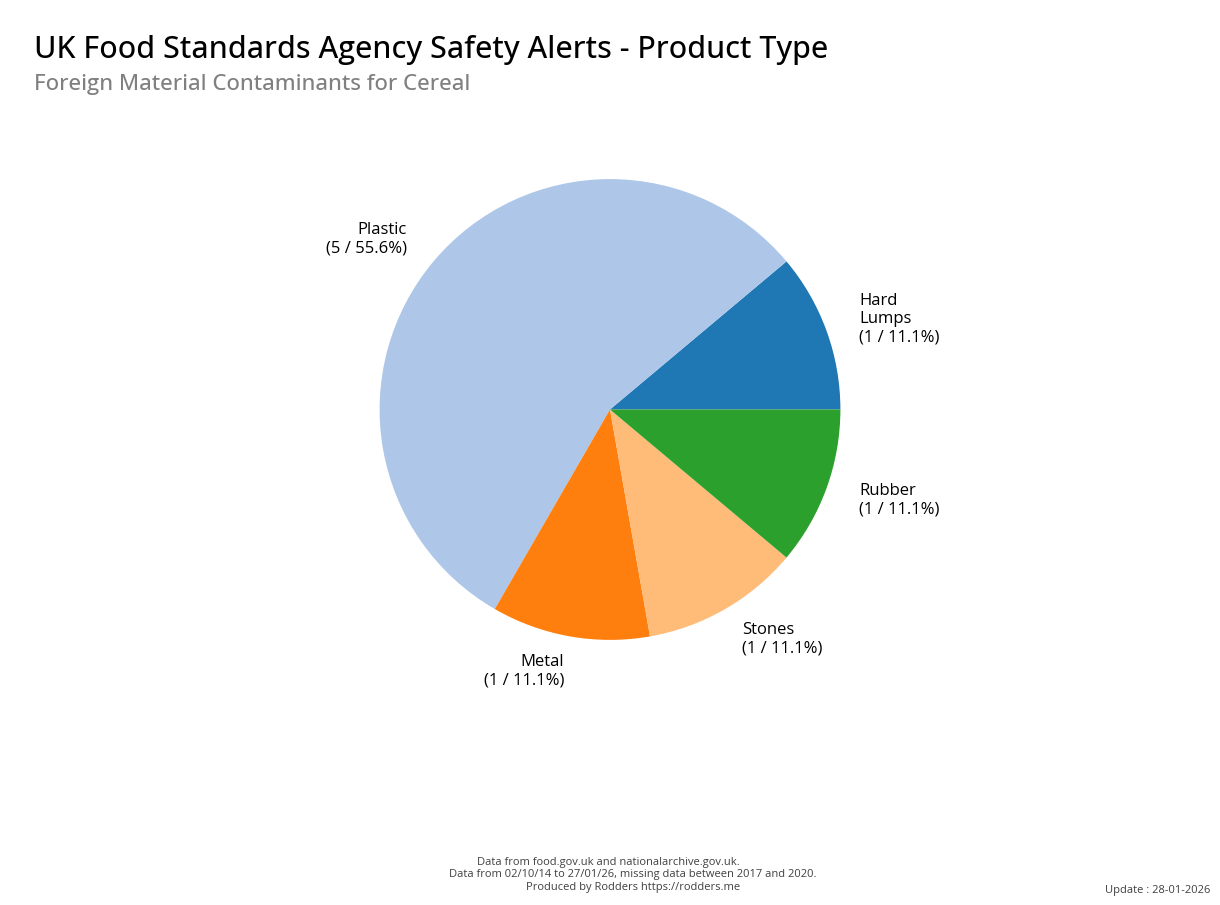
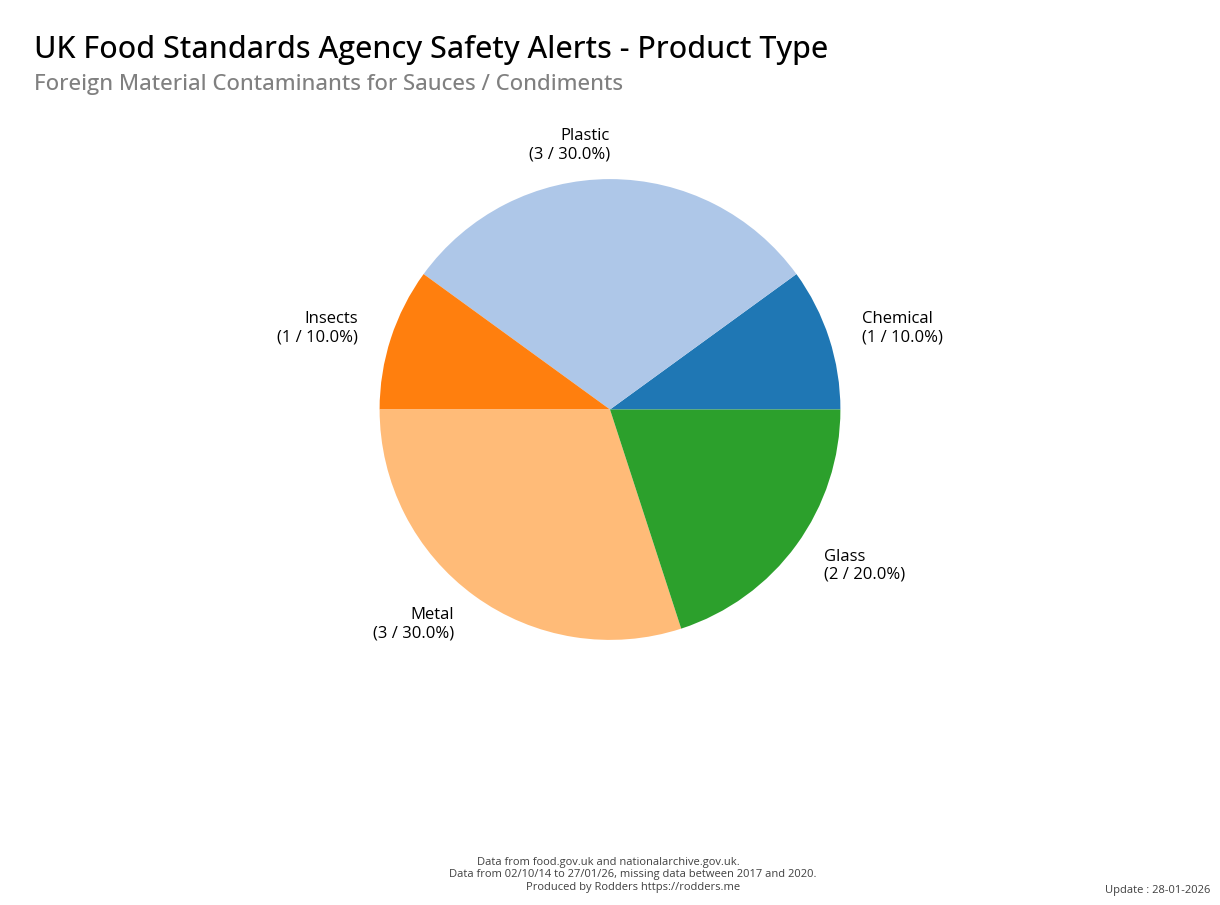
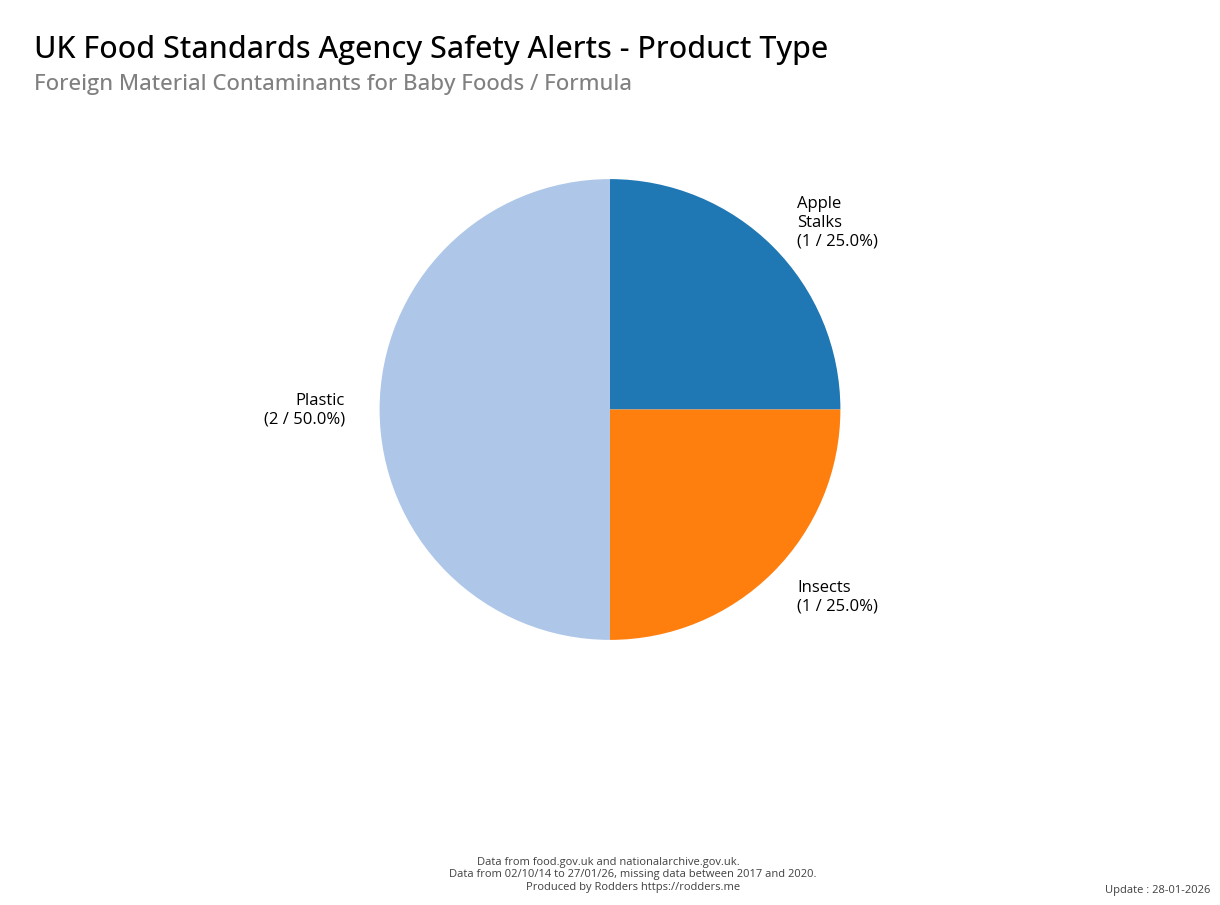
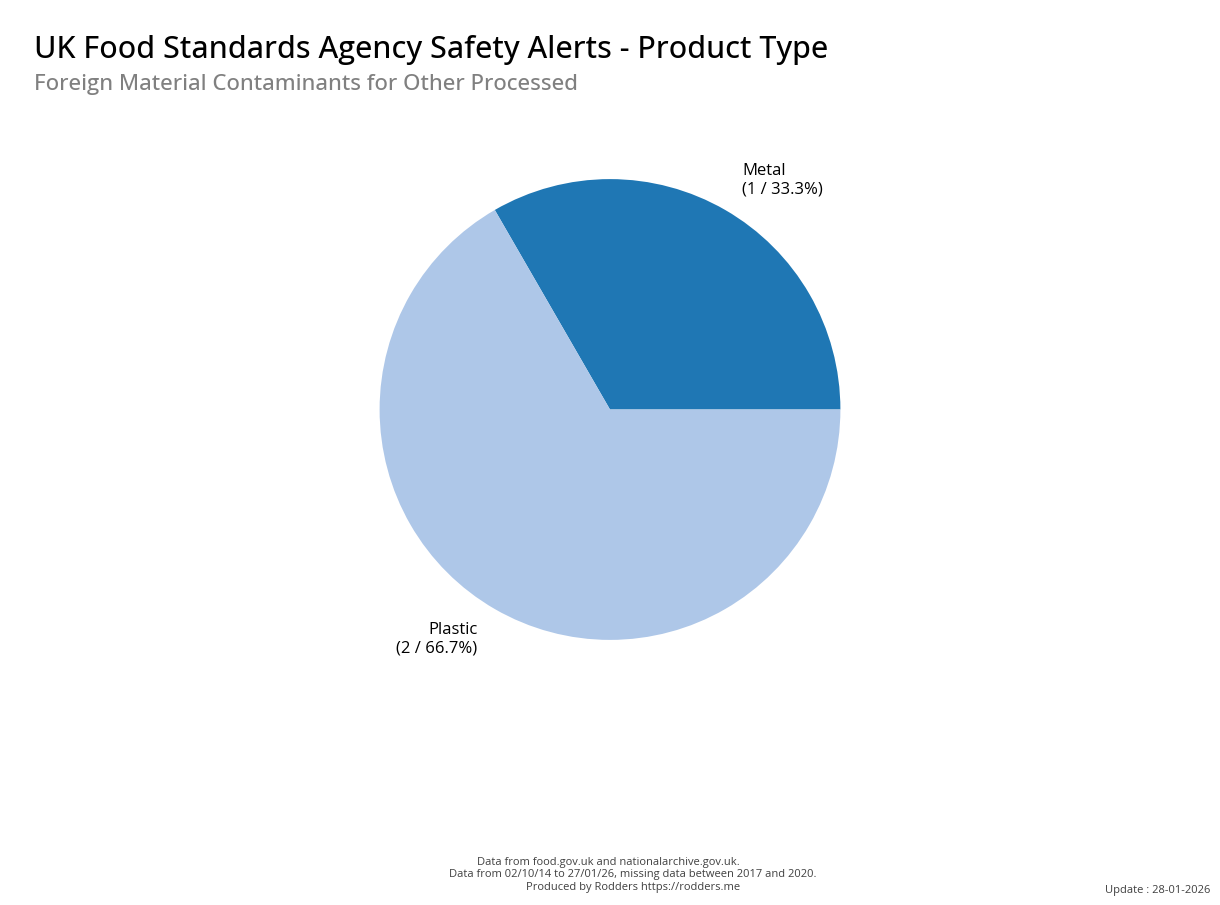
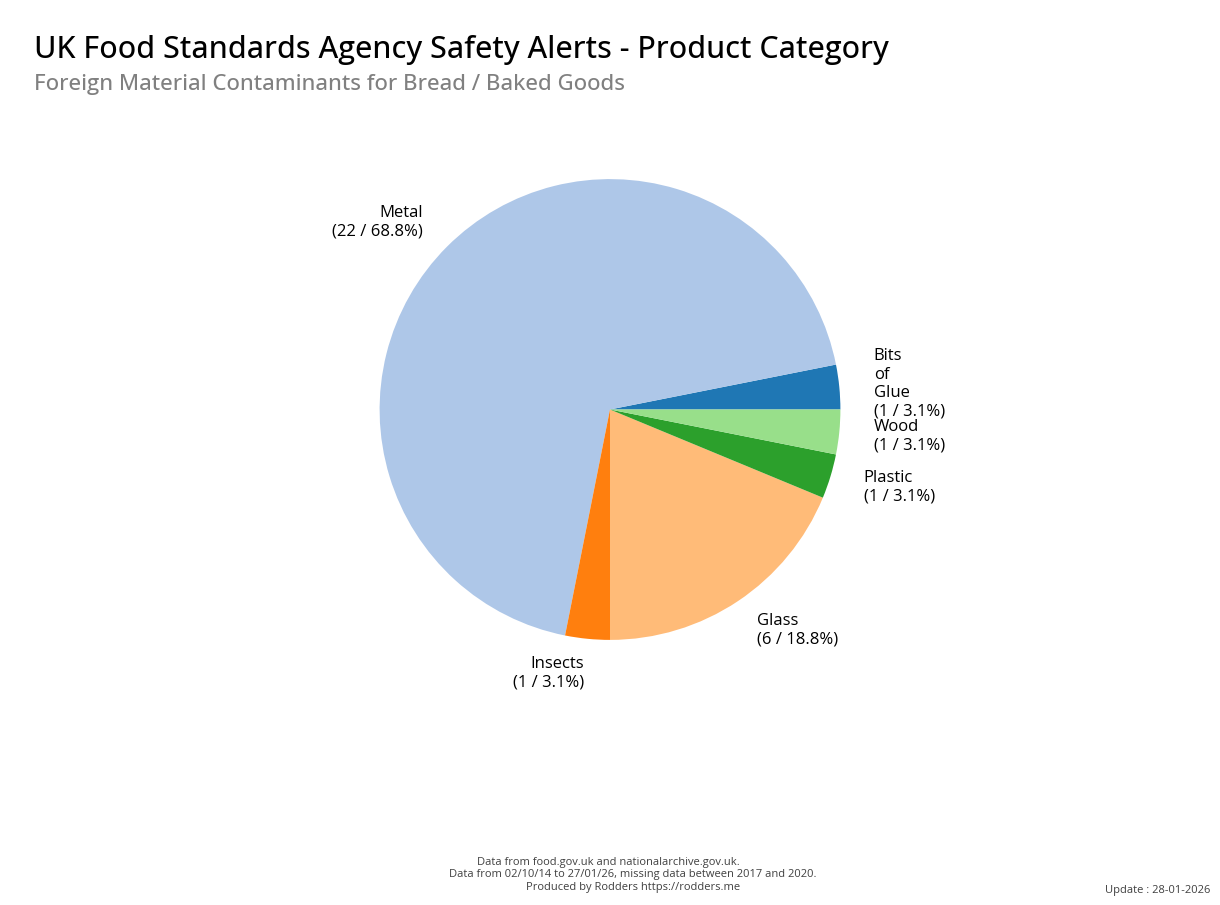
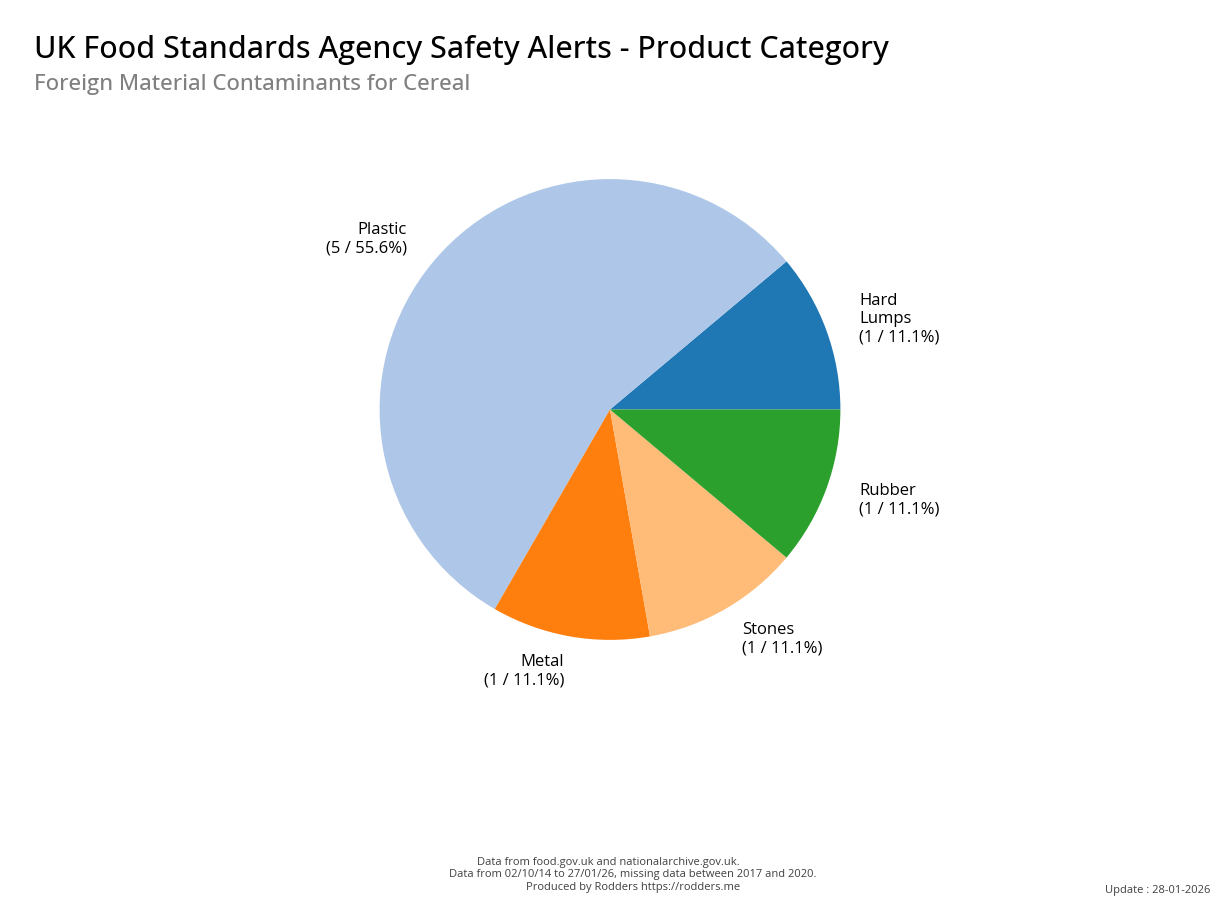
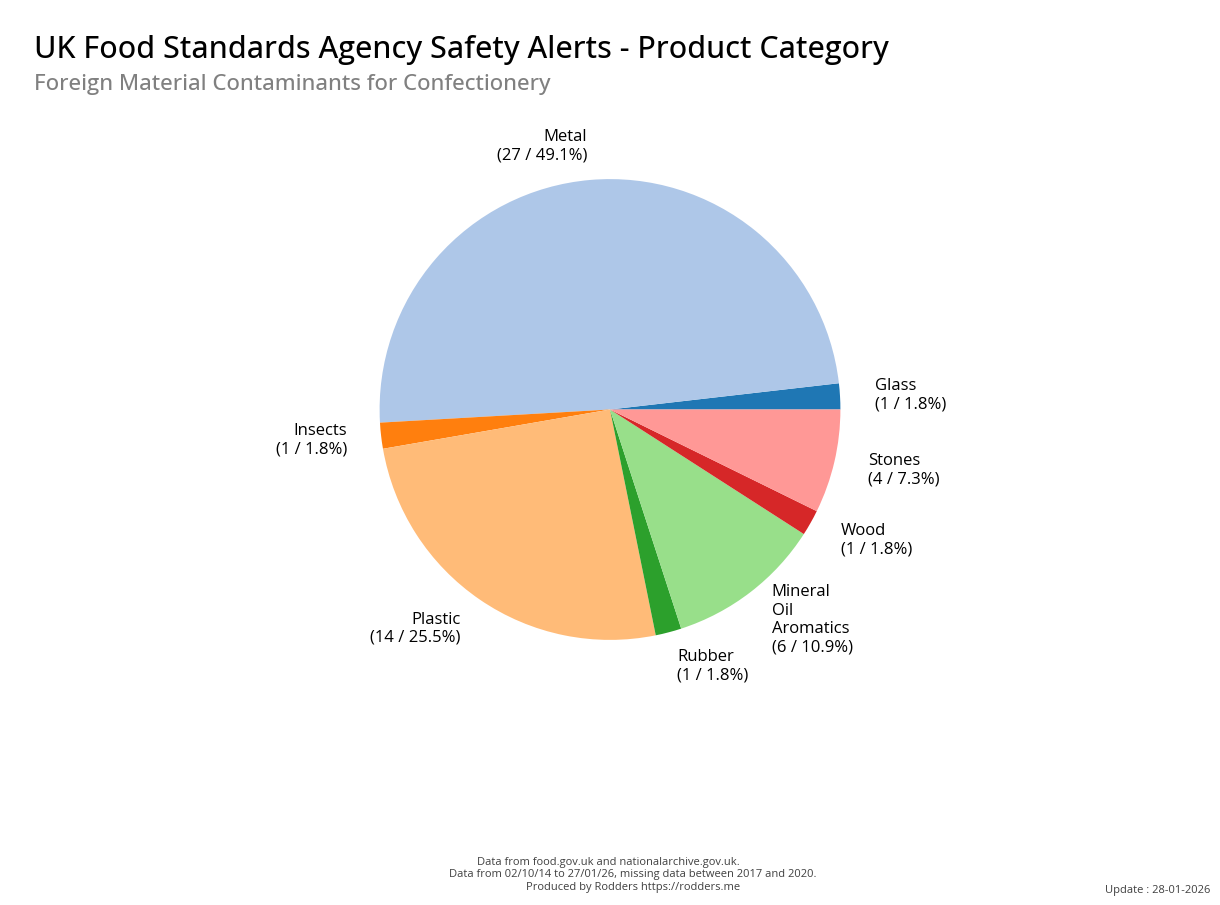
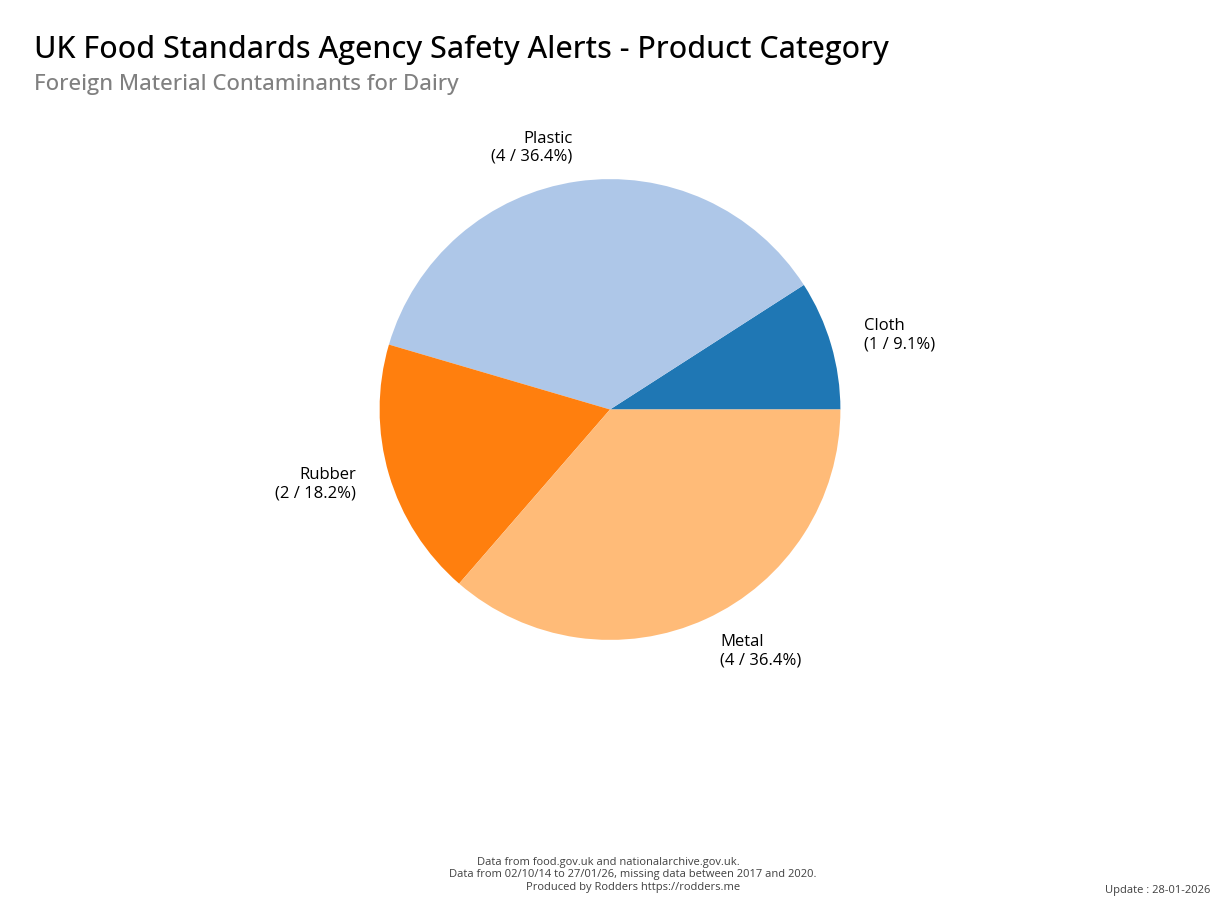
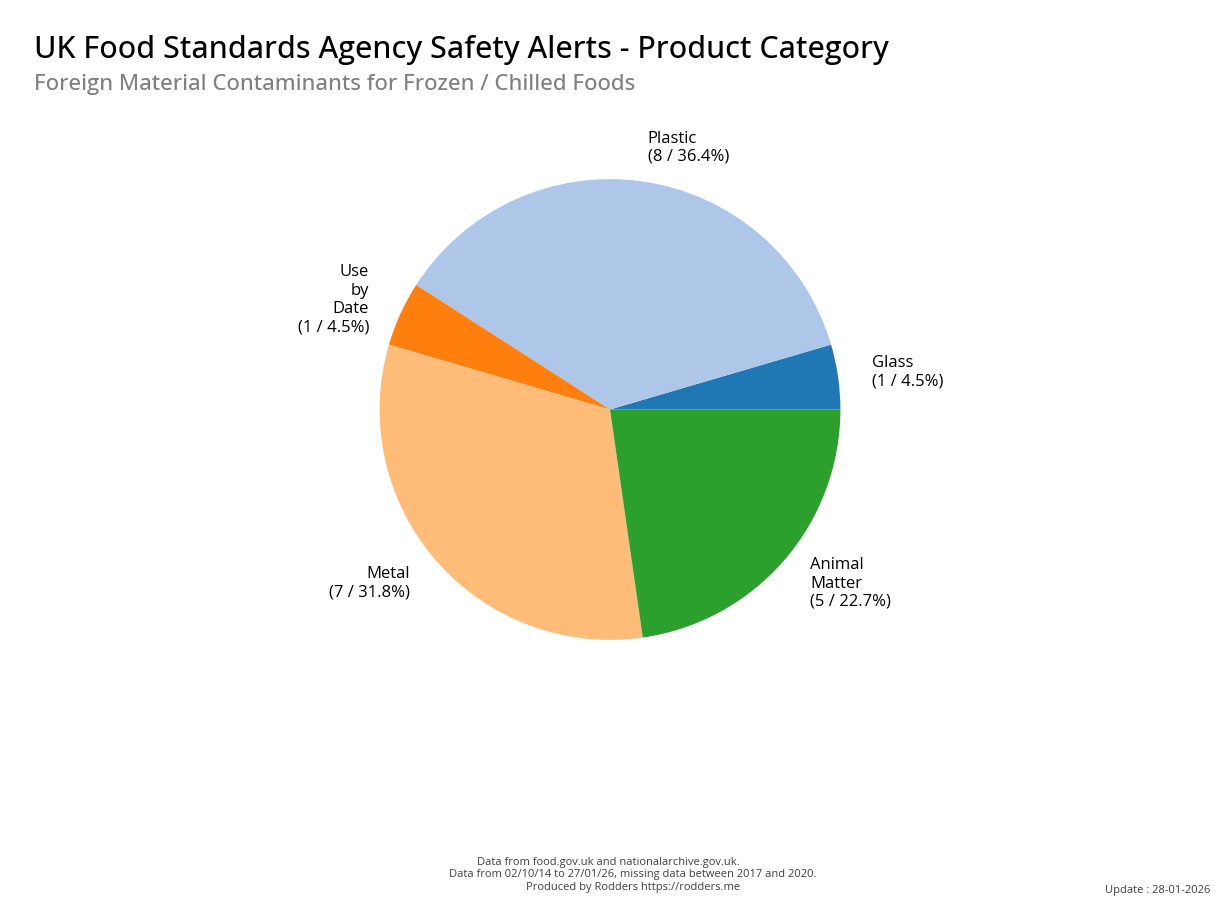
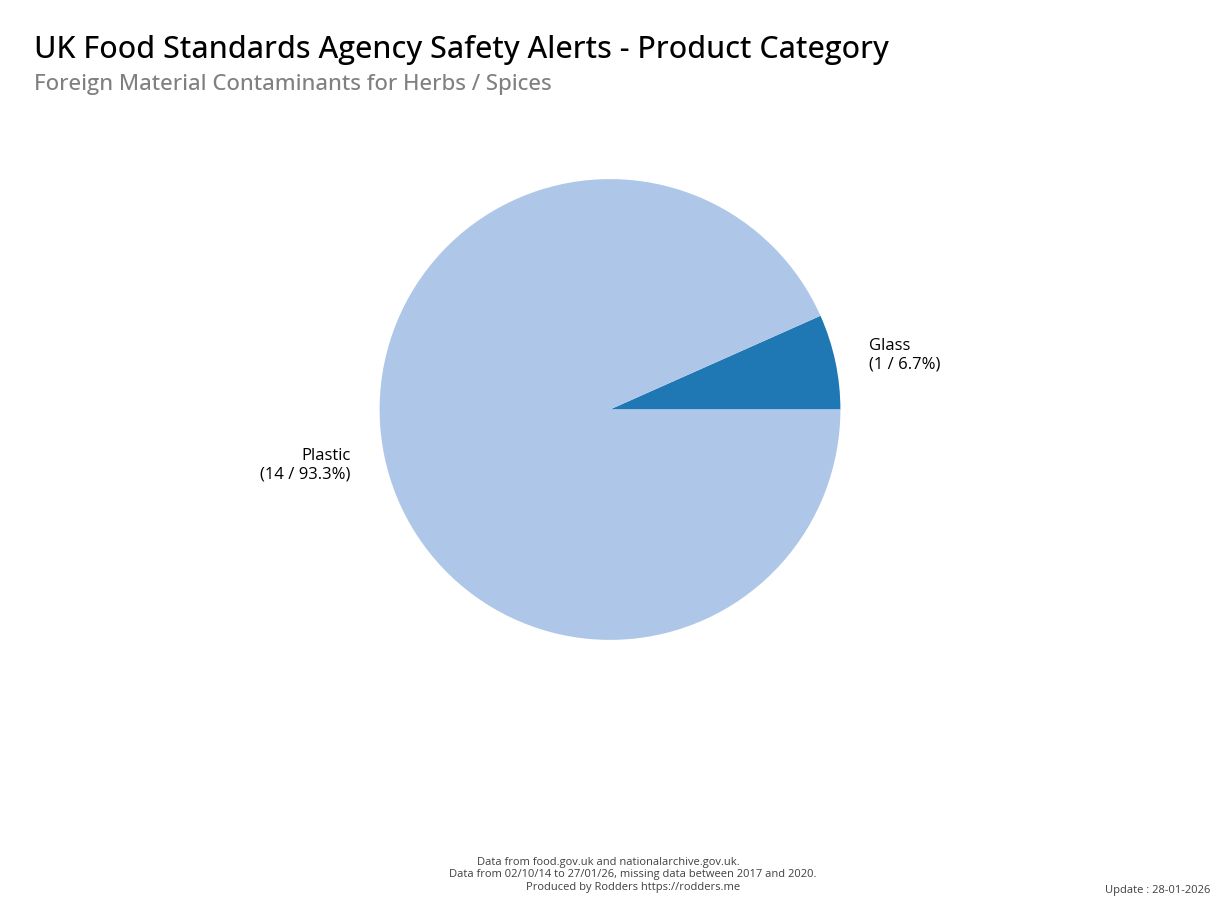
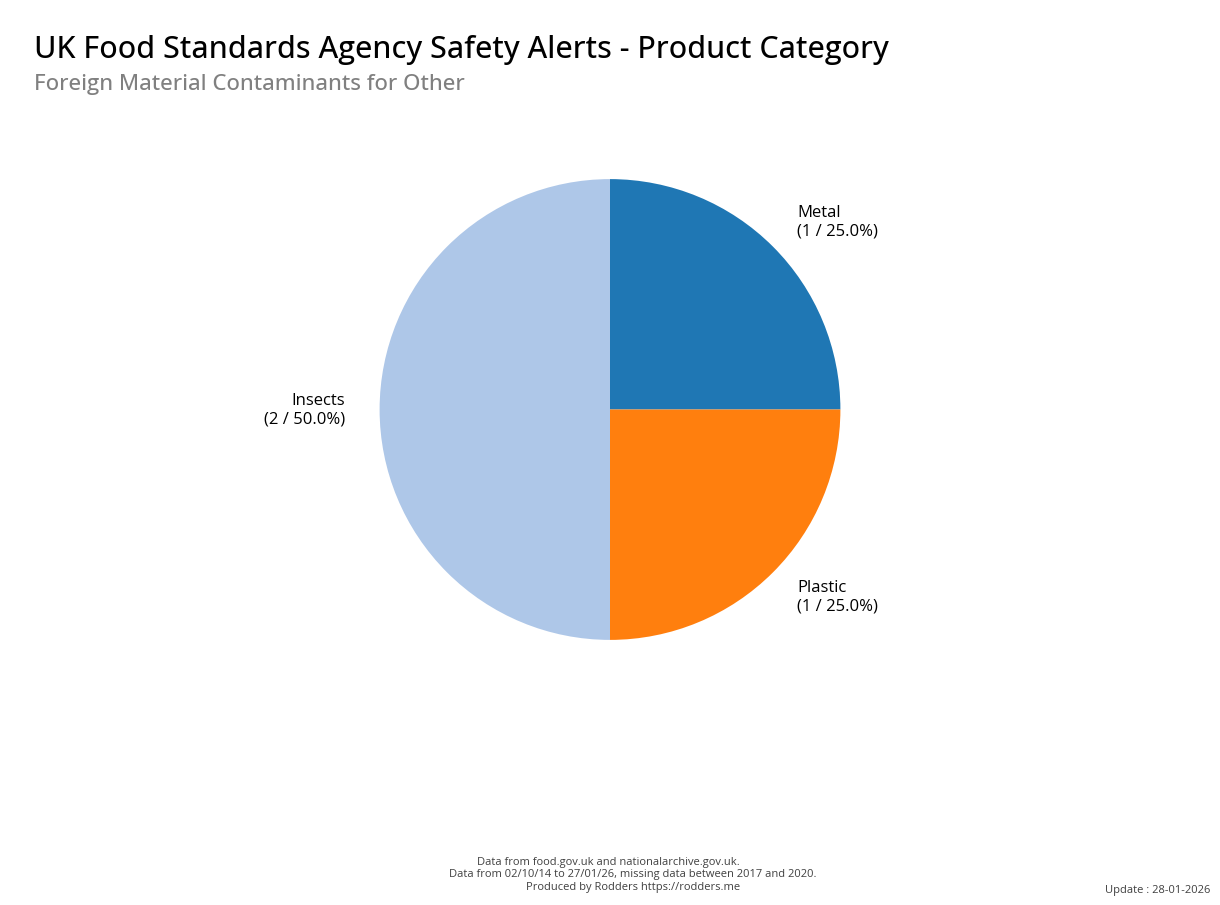
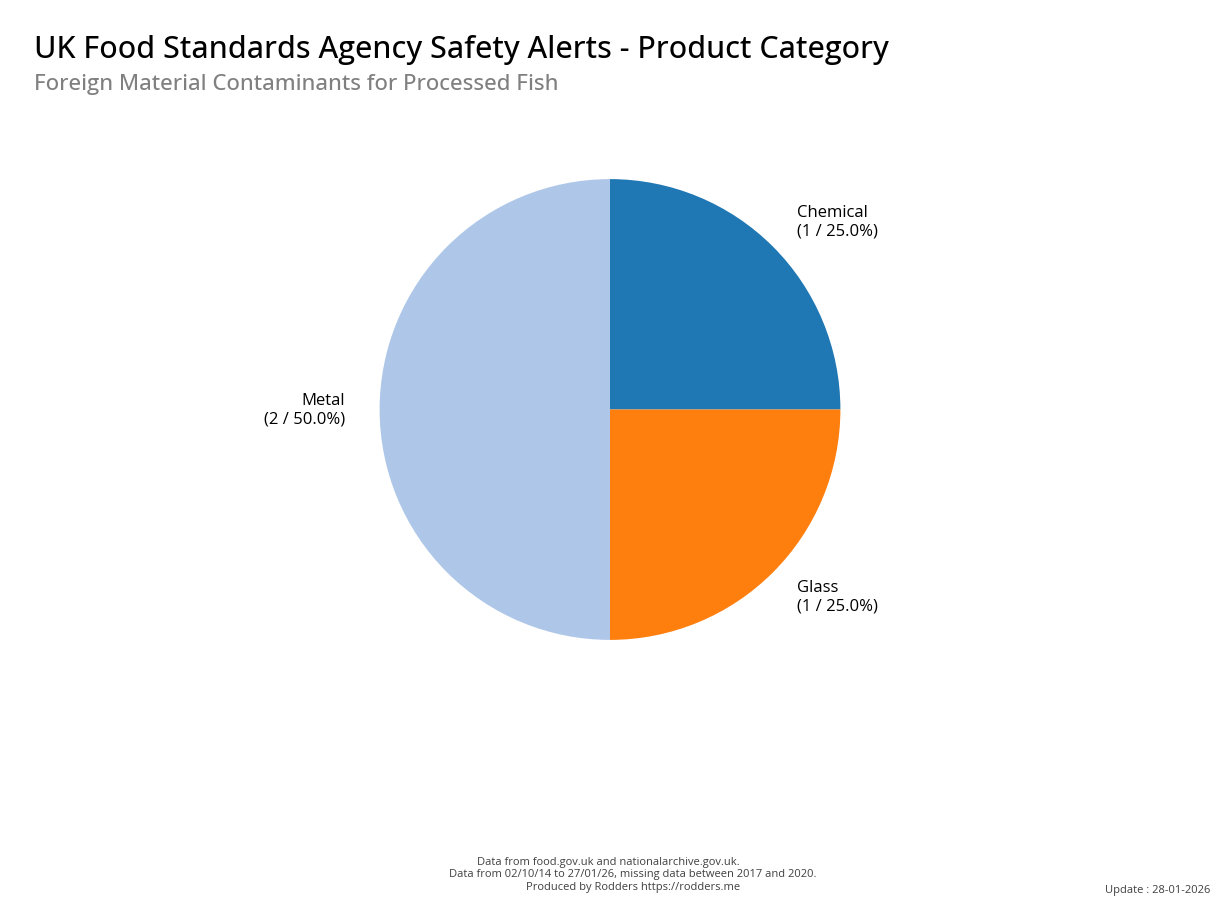
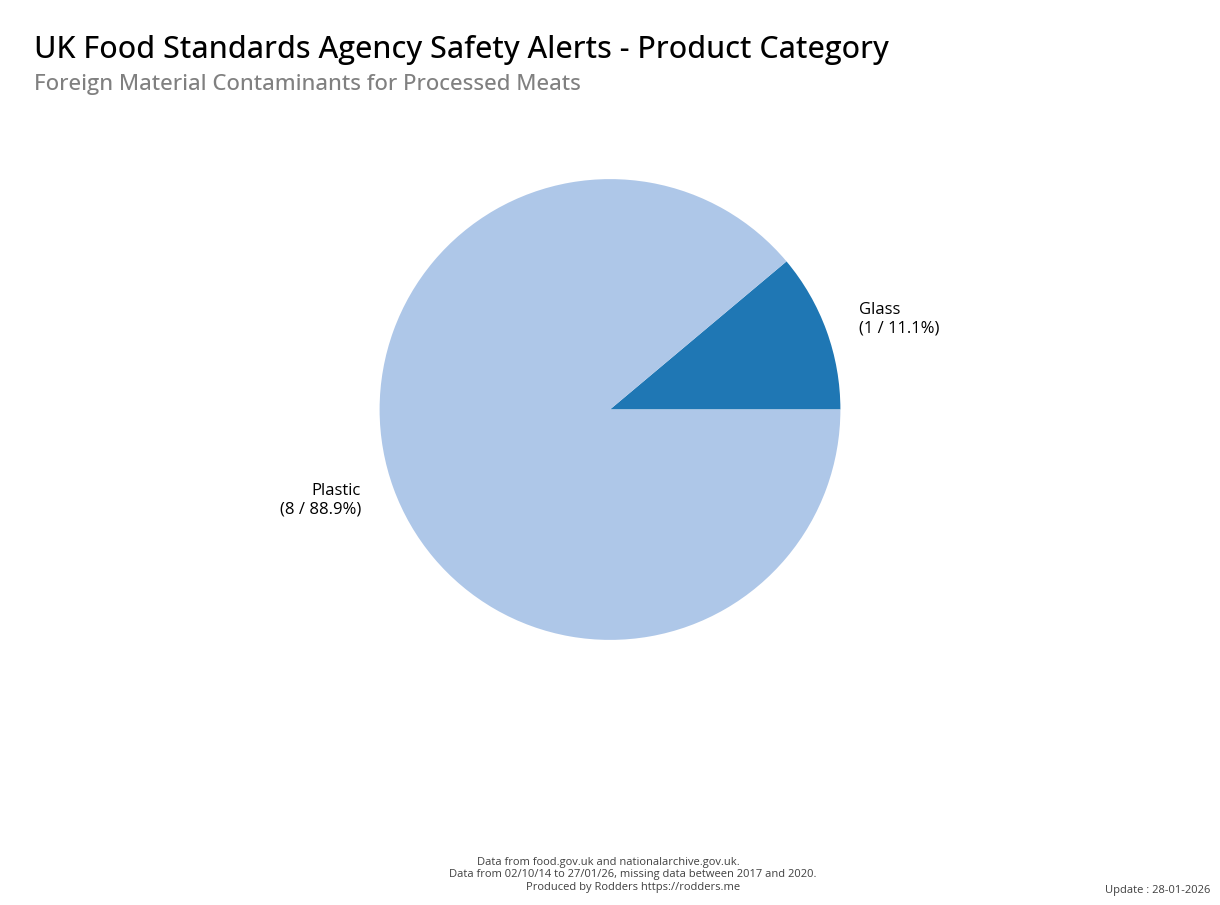
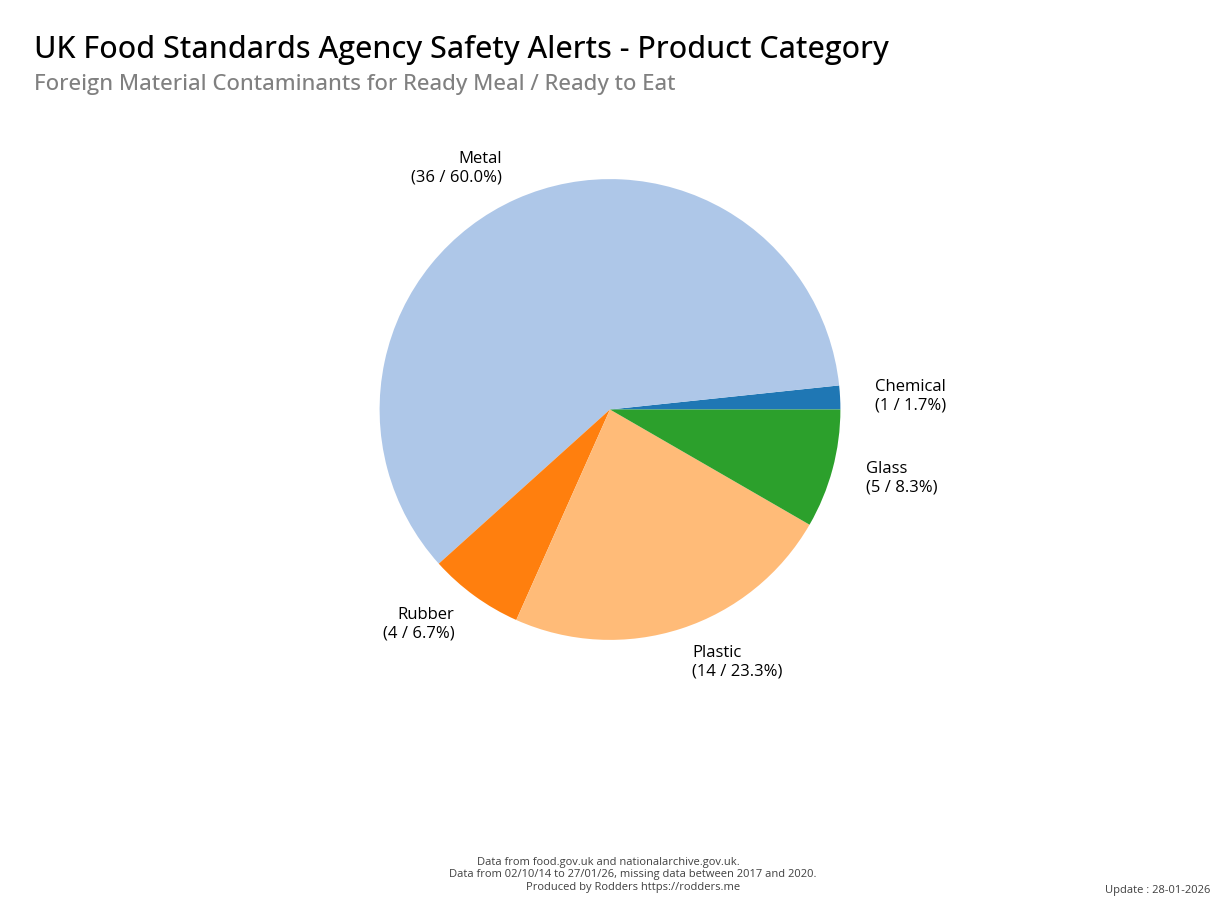
The predominant cause of Foreign Material Contamination food safety alerts are for pieces of metal, plastic,
glass and rubber found in foods.
This type of contamination in food can be caused by various factors. However, based on industry reports,
regulatory data, and research studies, here are some of the most likely causes:
Mechanical failure or wear and tear : Equipment used in food processing, packaging, and
transportation can malfunction or wear out over time, releasing small fragments of metal, plastic, or
rubber into the product.
Risk-Based Optimization (RBO) Gone Wrong : In Risk-Based Optimization, companies prioritize
maintenance based on a thorough assessment of risk levels associated with equipment failure.
However, when RBO is done incorrectly or prioritizes profits over safety and quality, it can lead to
avoiding essential maintenance to drive greater profits. The result of this approach can be:
Increased risk of contamination : Equipment failures can introduce contaminants into food
products.
Decreased product quality : Under-maintained equipment may not perform optimally, leading to
inconsistent or subpar product quality.
Reputation damage : Companies that compromise on safety and quality may face reputation damage,
regulatory issues, and even recalls.
Material defects or imperfections : Raw materials (e.g., plastics, rubbers) can have inherent
flaws, such as inclusions, cracks, or poor quality control during production, which
can lead to contamination during processing.
Human error or neglect : Employees may inadvertently introduce contaminants through carelessness,
lack of attention to detail, or inadequate training on Good Manufacturing Practices (GMPs).
Cross-contamination : Products are often processed in shared facilities, and there is a risk of
cross-contamination between different products or production lines.
Recall or salvage of contaminated products : If a product is recalled due to contamination issues,
it may be sold as "salvage" or "re-manufactured," which can lead to the introduction of
contaminants into other food products.
Some specific examples of common contaminants and their sources include:
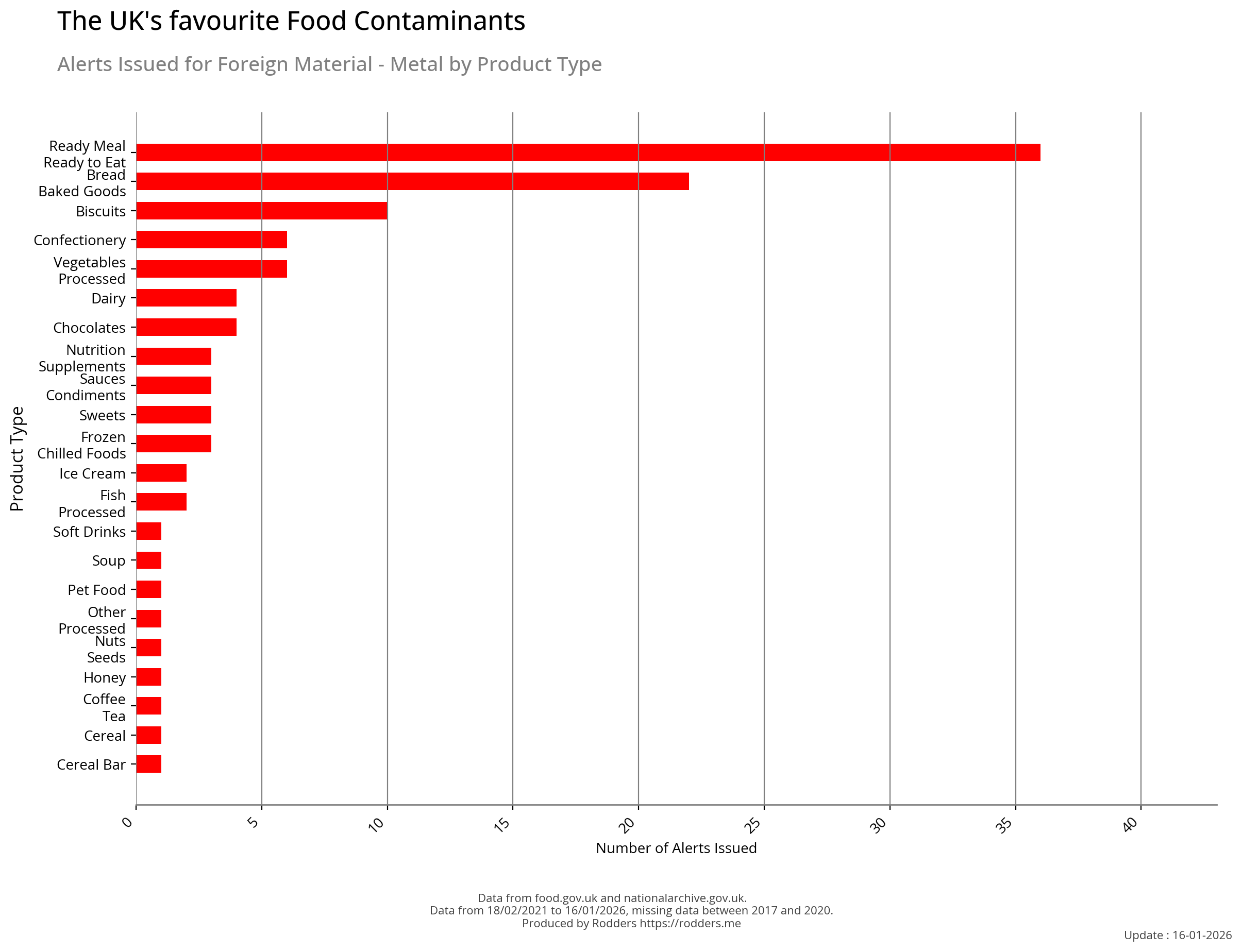
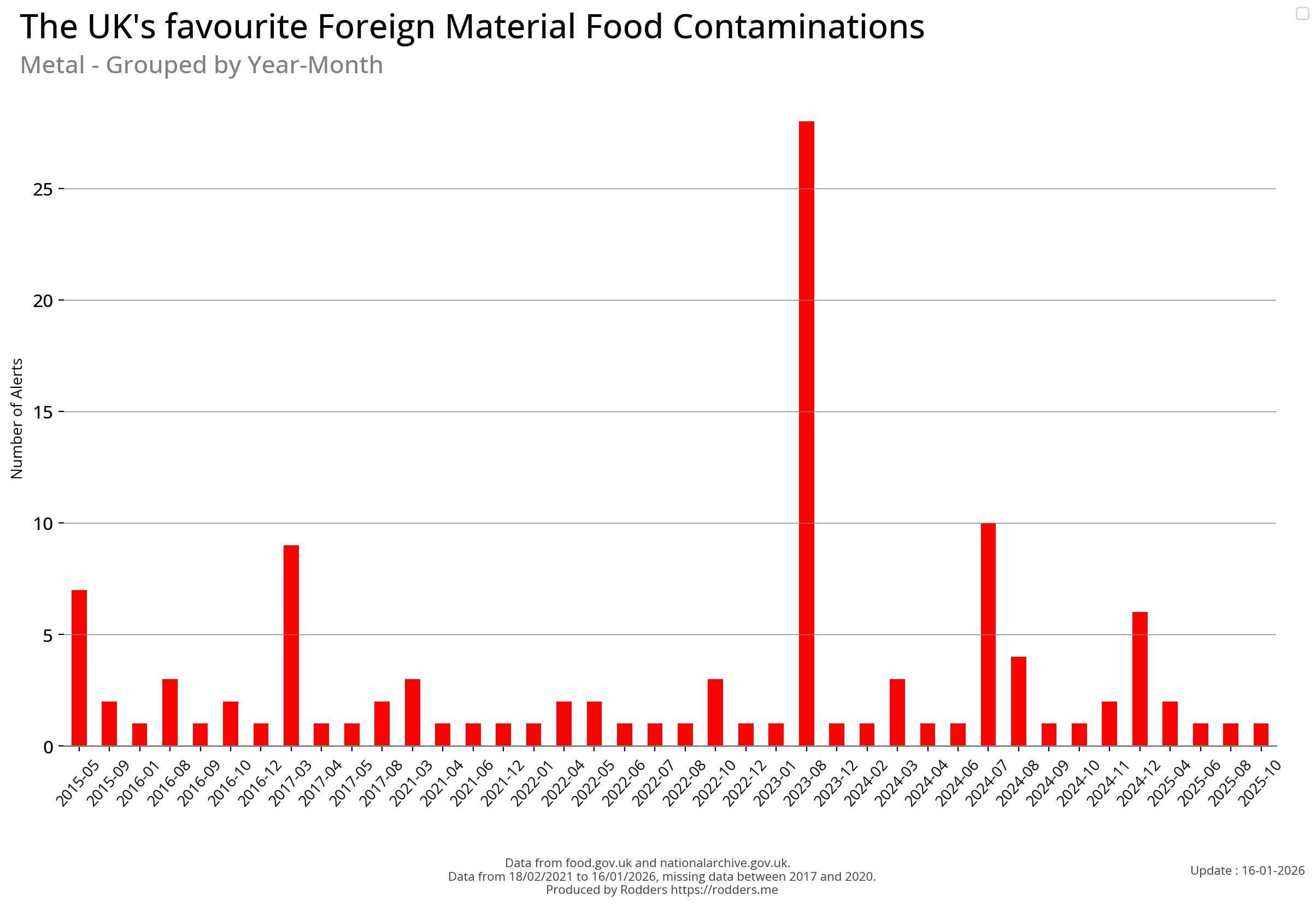
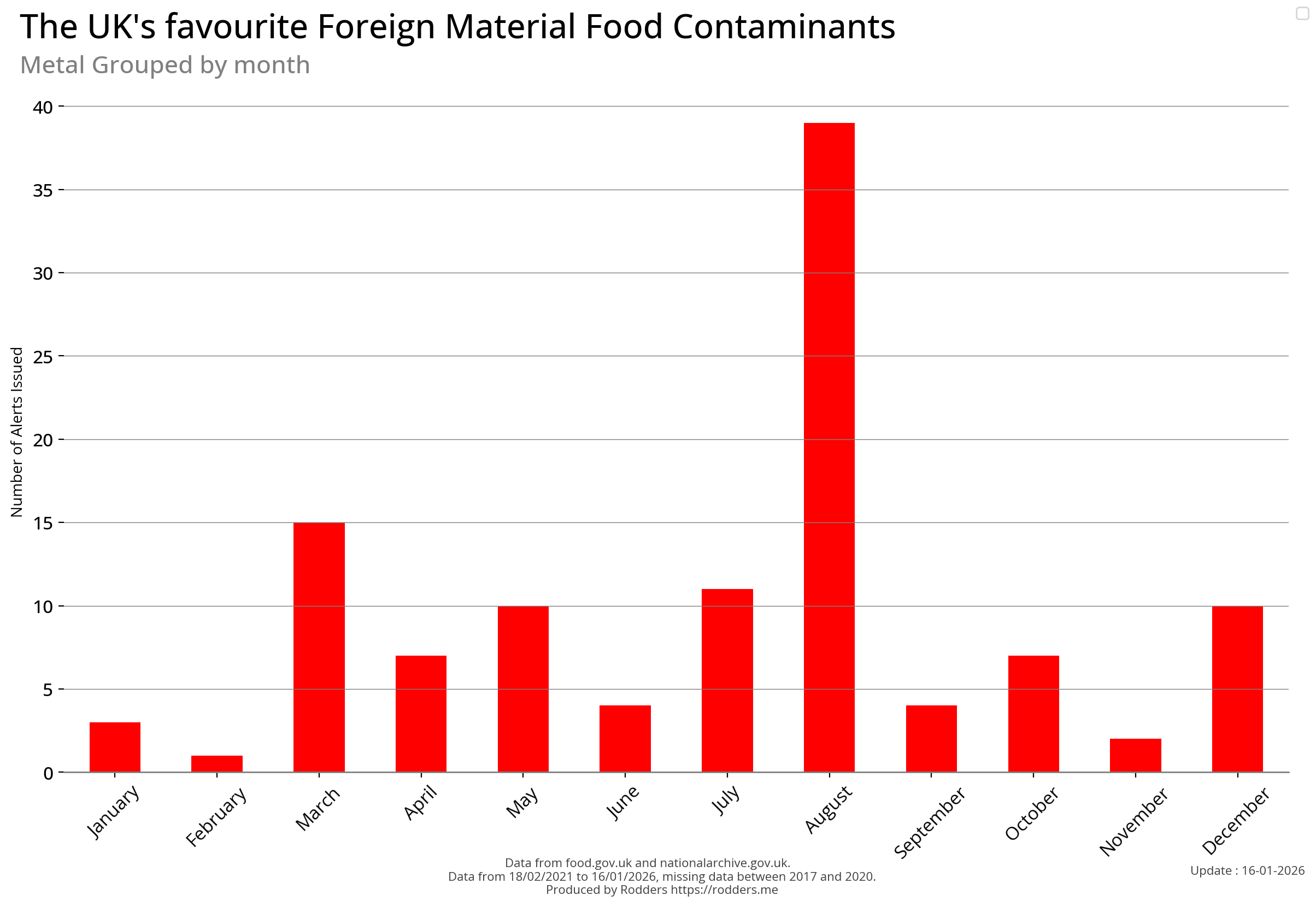
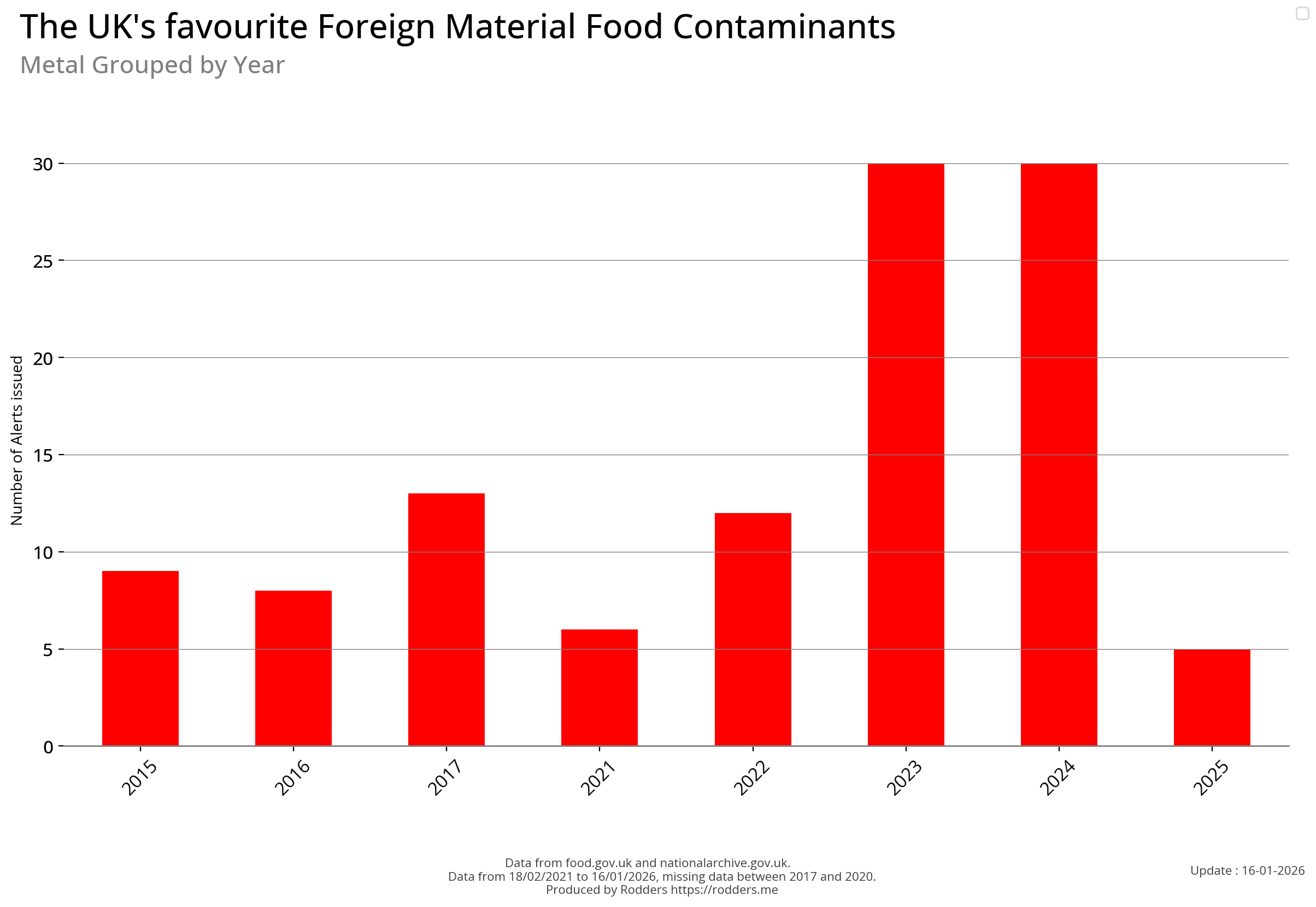
Metal fragments : from machinery (e.g., grinders, crushers), packaging materials (e.g., tin
cans), or even food itself (e.g., metallic particles in spices).
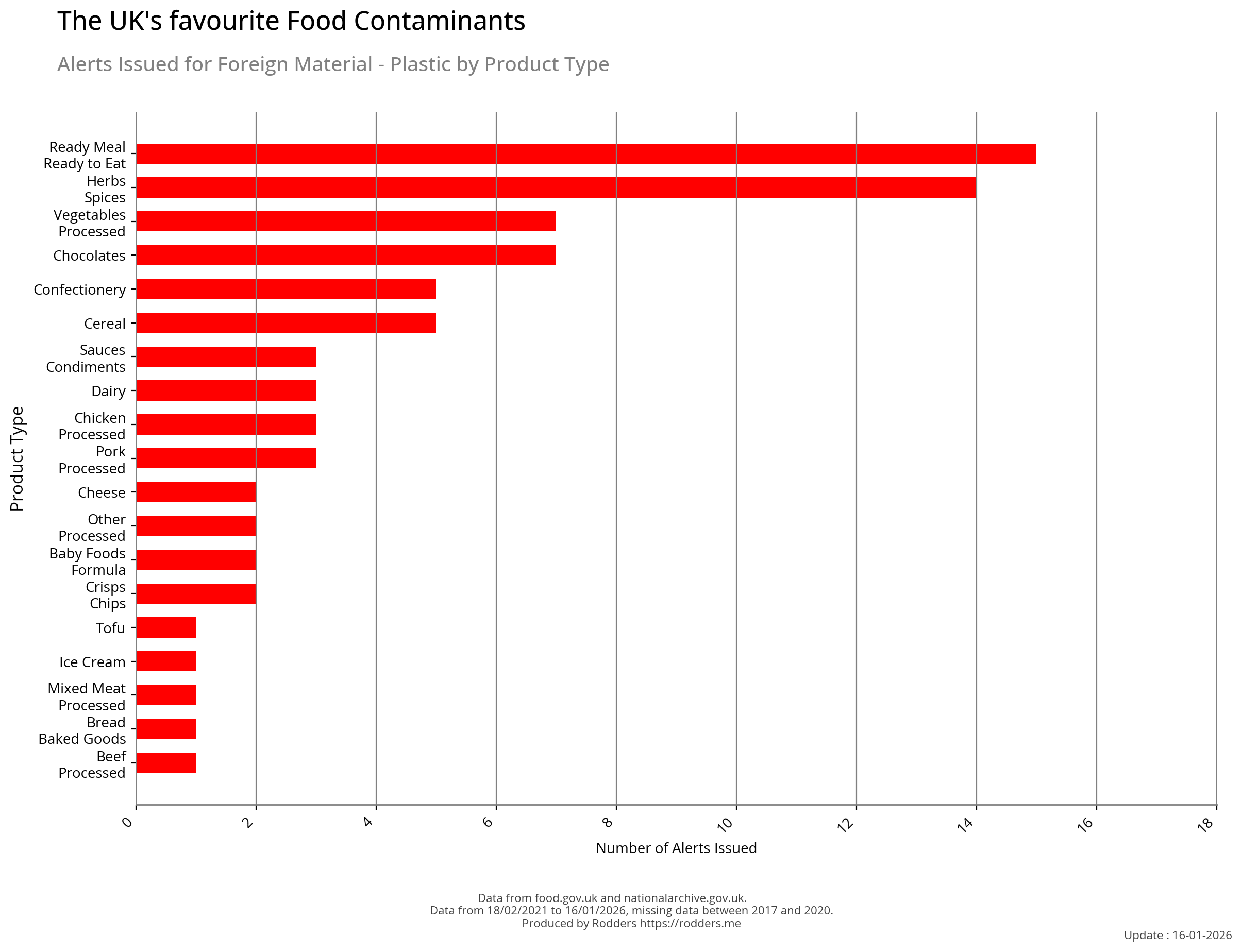
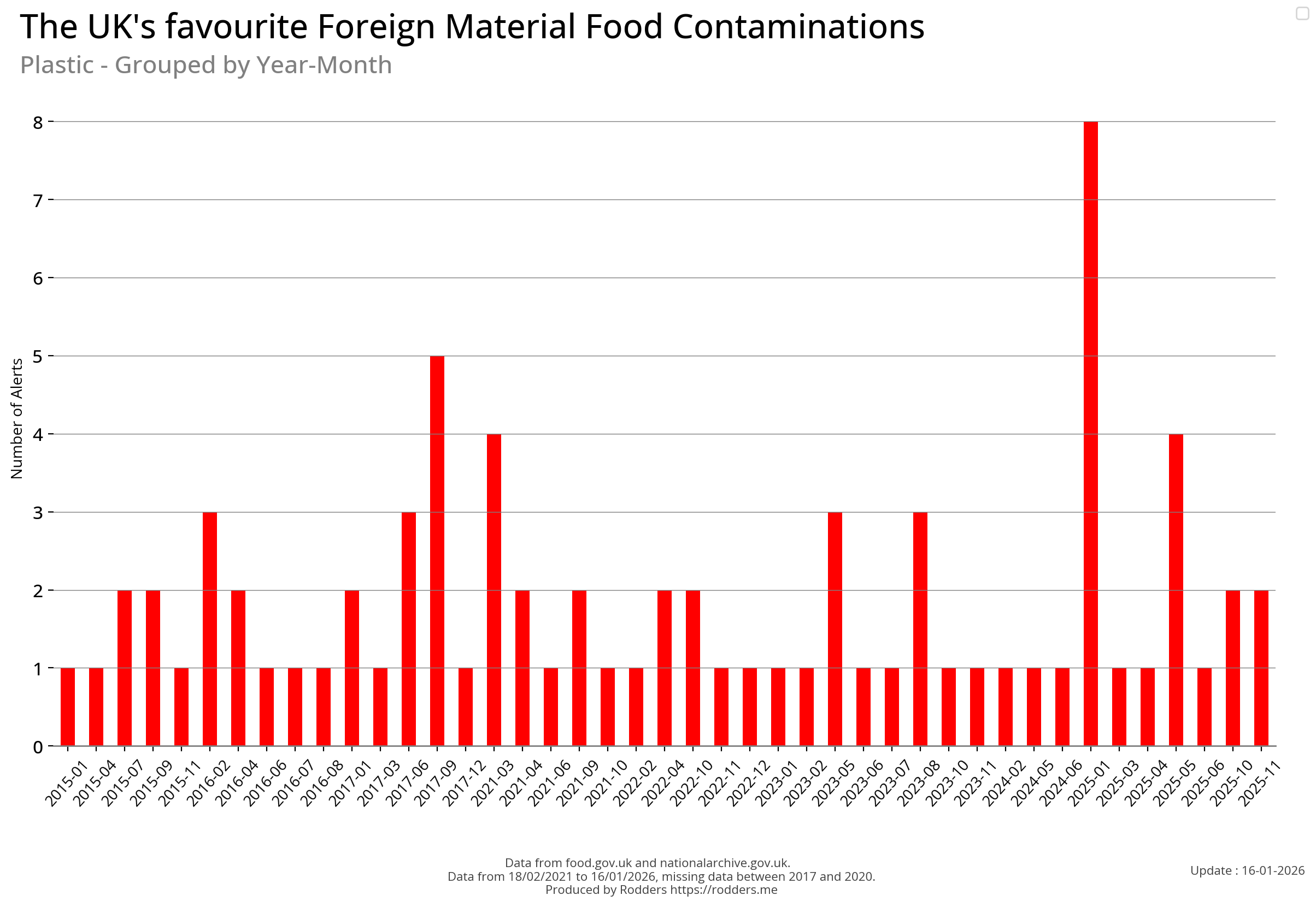
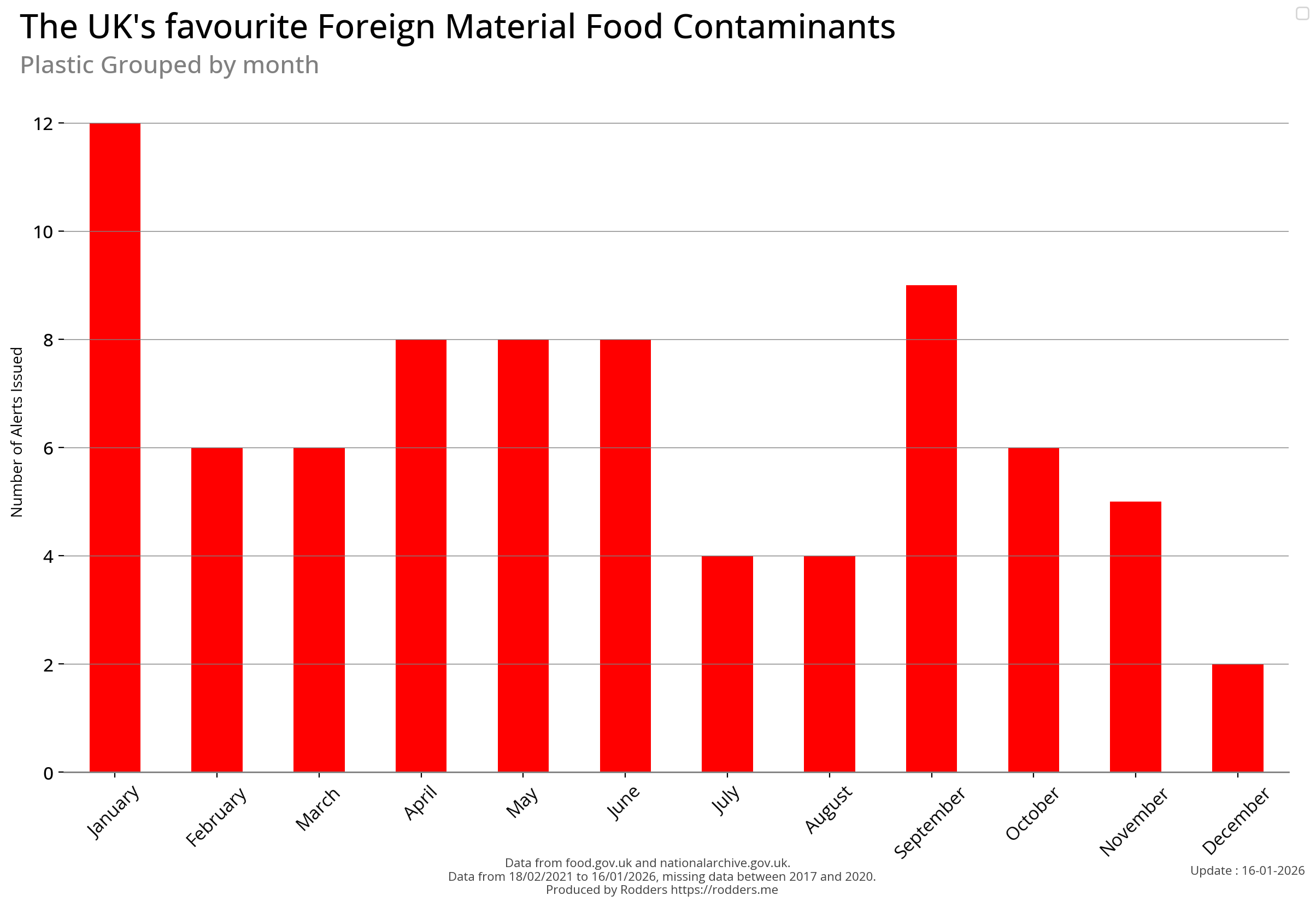
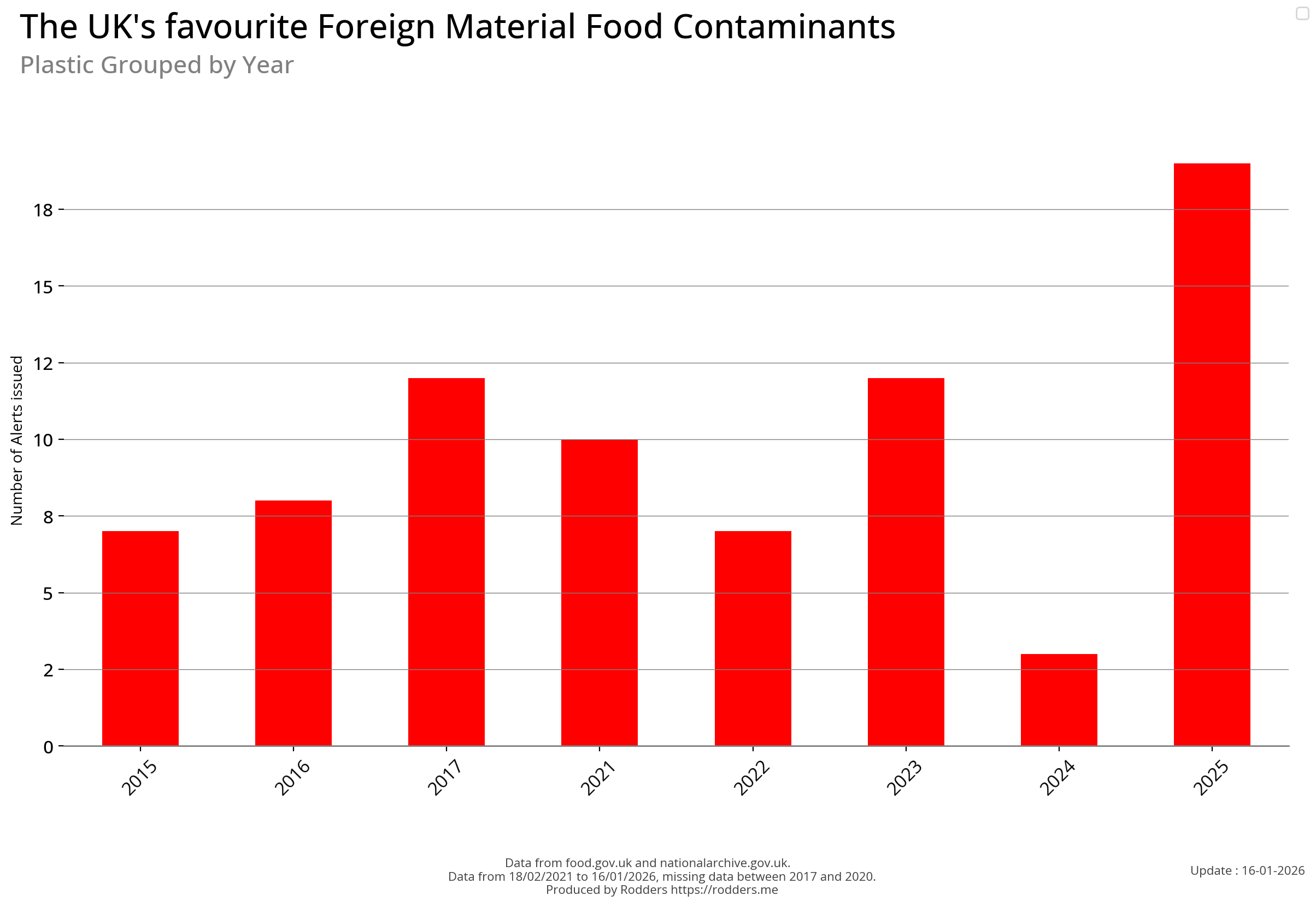
Plastic pieces : from packaging materials (e.g., plastic containers, films), processing
equipment (e.g., conveyor belts), or production materials (e.g., plastic tubing).
Rubber fragments : from gaskets, seals, or other rubber components used in food processing and
packaging equipment.